Finding the Best Shears for Dog Grooming: A Buyer's Guide to Top Picks
Finding the Perfect Cut: Your Guide to the Best Dog Grooming Shears
The quality of your dog grooming shears significantly impacts not only the final aesthetic of a trim but also your pet's comfort and safety during the process. Using dull or unsuitable tools can lead to pulling, uneven cuts, and unnecessary stress for both groomer and dog. Precision cutting, the ability to achieve a natural finish, and the removal of scissor lines are all outcomes directly influenced by the right choice of shears.
This guide aims to demystify the selection process, empowering dog owners and groomers to confidently choose shears that align with their specific needs. Our goal is to equip you with the knowledge to make an informed decision, ensuring a positive grooming experience and long-lasting tool performance.
Throughout this resource, you will gain an understanding of:
- The distinct types of grooming shears and their applications.
- Key features to evaluate, such as blade material, edge type, and handle design.
- Practical selection criteria based on dog coat type, grooming tasks, and ergonomic considerations.
- Essential maintenance practices to extend shear lifespan and maintain performance.
- Common pitfalls to avoid when purchasing and using grooming shears.
Understanding the Different Types of Dog Grooming Shears
Selecting the appropriate grooming shears begins with understanding their distinct designs and intended uses. Each type is engineered for specific tasks, and utilizing the correct tool can significantly improve efficiency, safety, and the quality of the finished groom.
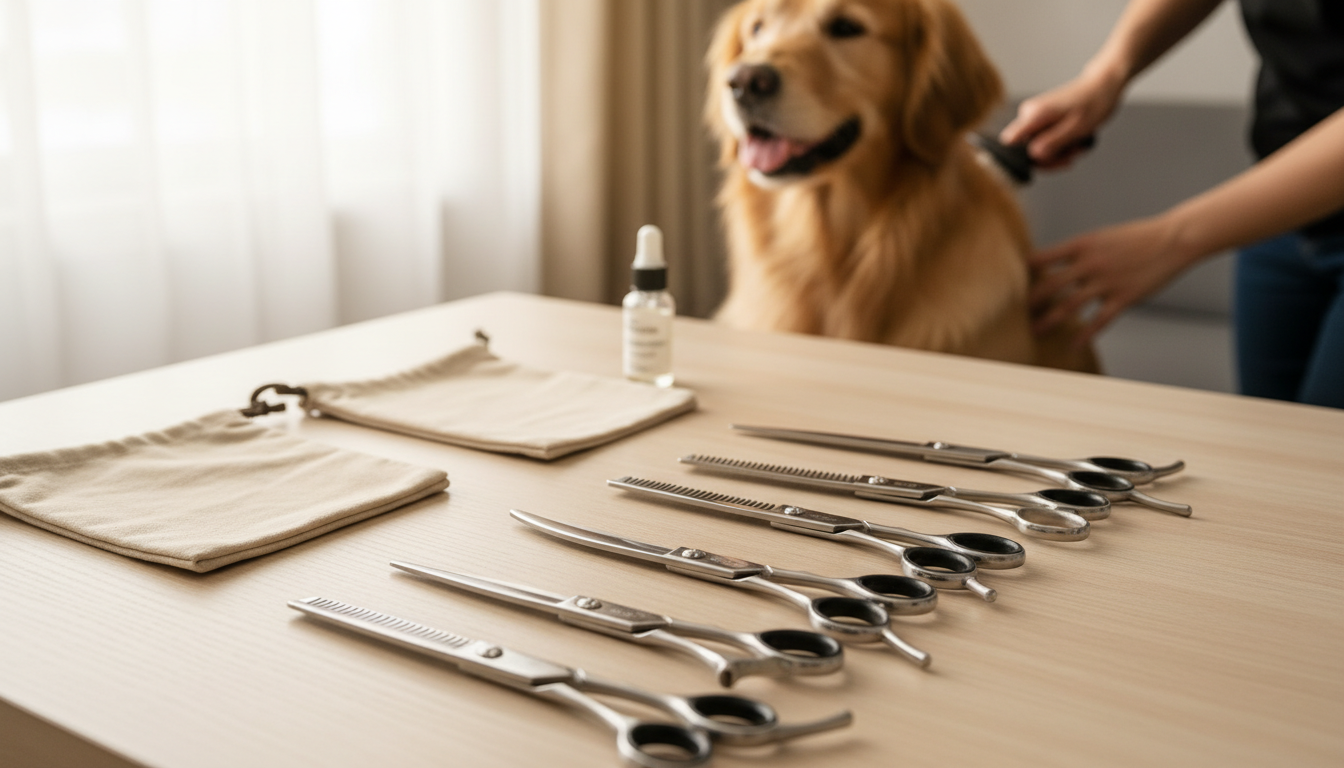
Straight Shears are the foundational tool in any grooming kit, valued for their versatility and precision. They excel at cutting straight lines, shaping, and tidying flat areas of a dog's coat, such as the sides, back, and legs. Their design allows for clean, crisp cuts, making them indispensable for initial coat length reduction and creating defined outlines.
Curved Shears are specialized for shaping rounded contours and creating soft, flowing lines where a straight edge would appear unnatural. They are particularly effective for areas like paws, the top of the head, and crafting a smooth top line over the back. The curved blade allows groomers to follow the natural curves of the dog's body, resulting in a more blended and aesthetically pleasing finish.
Thinning and Texturizing Shears are designed to reduce coat bulk, blend harsh scissor lines, and achieve a more natural, feathered appearance. Unlike straight shears that remove a solid section of hair, thinning shears have one serrated blade and one straight blade, or two serrated blades, which remove only a portion of the hair with each cut. This action helps to soften transitions and create a seamless blend, as exemplified by tools like the "Texturizer" shear, which leaves a natural look and removes scissor marks.
Chunkers and Blenders represent a more aggressive form of thinning shear. Characterized by wider teeth and larger gaps between them, chunkers remove a greater amount of hair per cut compared to traditional thinning shears. This makes them ideal for faster bulk removal on dense coats or for creating a very soft, natural finish without leaving obvious cutting lines. They are often used to quickly soften edges and blend larger sections of the coat.
What Makes a Great Pair of Dog Grooming Shears? Key Features to Look For
The effectiveness and longevity of dog grooming shears stem from several critical design and material choices. Understanding these components empowers you to select tools that not only perform well but also offer comfort and durability for a consistent grooming experience.
-
Blade Material and Quality The foundation of any high-performing shear lies in its blade material. High-quality stainless steel, often sourced from Japan, is preferred for its ability to hold a sharp edge, resist corrosion, and withstand repeated use. Superior steel alloys contribute to exceptional sharpness and edge retention, meaning the shears cut cleanly without bending or pulling hair, and require less frequent sharpening. This directly impacts the precision of your cuts and the comfort of the dog.
-
Ergonomics and Handle Design User comfort is paramount, especially during extended grooming sessions. Ergonomically designed handles reduce hand fatigue and strain, preventing discomfort over time. Different handle styles cater to various preferences and hand sizes:
- Opposing handles feature finger and thumb holes directly across from each other, offering a traditional, balanced feel.
- Offset handles position the thumb hole slightly forward, promoting a more open hand position that can reduce wrist strain.
- Crane handles have a significantly dropped thumb ring, allowing the hand to stay even straighter, further minimizing stress on the wrist and shoulder. A well-placed finger rest, or tang, provides additional stability and leverage, enhancing control during intricate work.
-
Blade Edge Type The cutting edge of a shear significantly influences its performance and maintenance requirements.
- Convex edge shears are characterized by a razor-sharp, finely honed edge that tapers to a point. They offer an exceptionally smooth, effortless cut, ideal for precise finishing work and achieving a seamless blend. However, their delicate edge requires specialized sharpening and careful handling.
- Bevel edge shears feature a more robust, angled edge. While not as razor-sharp as convex edges, they are durable and versatile, suitable for general cutting and bulk removal. Bevel edge shears are often easier to maintain and can withstand more rigorous use.
-
Shear Size and Length The appropriate shear length is dictated by the dog's size and the specific grooming task. Shorter shears (e.g., 4-6 inches) offer greater control for detailed work around sensitive areas like paws, faces, and ears. Longer shears (e.g., 7-10 inches) are more efficient for cutting larger sections of coat, reducing bulk, and achieving smooth, even lines on the body of larger breeds. Matching the shear length to the task at hand improves both efficiency and safety.
-
Tension Adjustment An adjustable tension screw allows you to fine-tune the feel and cutting action of your shears. Proper tension ensures the blades glide smoothly past each other without being too loose (which can cause folding of hair) or too tight (which can strain your hand and prematurely wear the blades). The ability to adjust tension means the shears can be adapted to different coat types and personal preferences, maintaining optimal cutting performance over time.
Choosing the Right Shears for Your Dog and Grooming Style
Selecting the optimal grooming shears involves a thoughtful assessment of various factors, ensuring the tools you choose align with your dog's specific needs, your grooming objectives, and your comfort. An informed decision not only enhances the grooming experience but also contributes to the longevity and effectiveness of your investment.
When evaluating shears, consider the following aspects:
-
Dog's Coat Type: The texture and density of your dog's coat significantly influence shear performance.
- Thick or Double Coats: These require robust shears with strong blades capable of cutting through dense hair without bending or snagging. Straight shears are often used for initial length reduction.
- Fine or Silky Coats: Precision is key here. Shears with very sharp, finely honed edges prevent hair from slipping or folding, ensuring a clean cut.
- Curly or Wavy Coats: Curved shears are invaluable for shaping and following the natural contours of these coats, while thinning shears help achieve a blended, natural look without harsh lines.
-
Dog Size and Breed Specifics: The physical scale of the grooming task dictates shear length and design.
- Smaller Breeds or Detail Work: Shorter shears, typically 5-6 inches, offer enhanced control and maneuverability for intricate areas like faces, paws, and ears.
- Larger Breeds or Bulk Removal: Longer shears, often 7-9 inches, cover more surface area with each cut, making them efficient for reducing overall coat length on bigger dogs. Breed-specific styles, such as those requiring rounded heads or sculpted bodies, often benefit from specialized curved shears.
-
Groomer Skill Level: Your experience level influences the type of shears that will be most forgiving and effective.
- Beginners: Shears that offer a good balance of durability and a reliable edge are often preferred. Tools known for their consistent performance, such as some entry-level straight shears, can provide a solid foundation for learning without requiring advanced handling techniques. Ergonomic design is particularly important to minimize hand fatigue during longer learning sessions.
- Experienced Groomers: As skill develops, groomers may seek out specialized shears with advanced blade geometries, higher-grade steel for superior edge retention, and refined ergonomic features that support intricate and prolonged work. Shears favored in professional settings, like those used for precision finishing or blending, often fall into this category.
-
Specific Grooming Tasks: Different stages of grooming call for distinct shear types.
- Bulk Cutting: Straight shears are the primary tool for removing significant coat length, establishing the initial shape.
- Finishing Work: Very sharp straight or curved shears are used for creating crisp lines, defining shapes, and achieving a polished final appearance.
- Detail Trimming: Shorter, often fine-tipped, straight or curved shears allow for meticulous work around sensitive or small areas.
- Blending: Thinning or texturizing shears are crucial for softening harsh scissor lines, creating seamless transitions between different coat lengths, and adding natural volume or texture. A shear with a moderate tooth count, for example, can effectively remove scissor marks and create a more natural finish.
-
Budget vs. Investment: The trade-off between initial cost and long-term performance is a critical consideration.
- Initial Cost: Less expensive shears may be appealing for infrequent use or for those just starting out. However, they might require more frequent sharpening or replacement, and their performance can diminish quickly.
- Long-Term Investment: Higher-priced shears typically feature superior blade materials (e.g., Japanese steel), advanced manufacturing processes, and ergonomic designs that reduce hand strain. These shears tend to hold an edge longer, can be professionally sharpened multiple times, and offer a more consistent, smooth cutting action. While the upfront cost is greater, their durability and sustained performance often make them a more economical choice over time, especially for frequent grooming. Investing in quality shears can prevent frustration, reduce the risk of pulling hair, and contribute to a more positive grooming experience for both you and your dog.
Common Mistakes and Important Considerations Before Buying
Investing in dog grooming shears is a decision that impacts grooming efficiency, the quality of the finish, and your own comfort. However, several common pitfalls can lead to frustration and premature replacement if not considered beforehand. Understanding these factors can help ensure a more informed and satisfactory purchase.
- The Lure of Inexpensive Shears: While budget-friendly options can be tempting, shears made from low-quality materials often dull quickly, pull hair, and deliver inconsistent cuts. This not only leads to poor results and increased grooming time but can also cause discomfort for the dog and frustration for the groomer. Inferior steel may also be more prone to rusting or pitting, significantly shortening the tool's usable life.
- Not Matching Shears to Task: Each type of grooming shear—straight, curved, or thinning—serves a specific purpose. Attempting to perform intricate shaping with heavy straight shears or trying to achieve a blended finish with only curved shears will yield subpar results and can damage the coat. Using the wrong tool can also put undue stress on the shears themselves, leading to premature wear or breakage.
- Neglecting Ergonomics: The design of a shear's handle, finger holes, and overall balance significantly impacts the user's hand health. Poorly designed or ill-fitting shears can lead to hand fatigue, discomfort, and, over time, repetitive strain injuries such as carpal tunnel syndrome. Prioritizing ergonomic features like offset handles or swivel thumbs can mitigate these risks, especially for those who groom frequently.
- Overlooking Maintenance: Even the highest quality shears require consistent care to maintain their performance. Neglecting regular cleaning, oiling, and proper storage can lead to sticky action, dull blades, or rust, effectively reducing a premium tool to the performance level of a cheap one. A lack of maintenance shortens the lifespan of any shear, regardless of its initial cost.
- Understanding Return Policies and Warranties: For higher-end shear investments, knowing the seller's return policy and the manufacturer's warranty is crucial. A clear return window allows you to assess the shear's fit and feel, while a warranty protects against manufacturing defects. Familiarity with these terms provides peace of mind and safeguards your investment against unexpected issues.
Beyond the Purchase: Essential Care and Maintenance for Your Grooming Shears
Investing in quality dog grooming shears is the first step toward effective and comfortable grooming. However, their long-term performance, precision, and your safety depend significantly on consistent care and proper maintenance. Neglecting these essential practices can quickly degrade even the finest shears, leading to pulling, uneven cuts, and premature replacement.
-
Immediate Cleaning After Each Use: Hair, dander, and product residues can accumulate between the blades and pivot screw, hindering smooth operation and fostering rust. After every grooming session, meticulously wipe down your shears with a soft, dry cloth. For a deeper clean, a specialized shear cleaning spray can dissolve stubborn grime, followed by thorough drying to prevent moisture damage. This step is critical for maintaining a sharp edge and hygienic tool.
-
Routine Oiling and Lubrication: To ensure fluid movement and protect against corrosion, regular oiling is indispensable. Apply a small drop of shear oil to the pivot screw and along the inside of the blades where they meet. Open and close the shears several times to distribute the oil, then wipe off any excess. This lubrication reduces friction, extends the life of the pivot mechanism, and forms a protective barrier against moisture, which is particularly important for high-carbon steel blades prone to rust.
-
Secure and Protective Storage: Improper storage is a leading cause of accidental damage. Always store your shears in a protective case, pouch, or on a dedicated shear stand when not in use. This prevents the delicate blade tips and edges from being nicked, dulled, or misaligned by contact with other tools or hard surfaces. A secure storage solution also minimizes the risk of accidental drops.
-
Professional Sharpening and Servicing: While some minor honing can be done at home, dog grooming shears require specialized professional sharpening to maintain their precise edge geometry. Attempting to sharpen them with standard household sharpeners can irreparably damage the blades. Seek out a reputable sharpener experienced with grooming shears when you notice them pulling hair, feeling dull, or leaving an uneven cut. Professional servicing ensures the correct angle is restored without compromising blade integrity.
-
Avoiding Common Damage Pitfalls: Grooming shears are precision instruments, not all-purpose scissors. Dropping shears, even from a short height, can bend blades, misalign the pivot, or chip the cutting edge, often requiring costly repairs or replacement. Similarly, using them to cut anything other than clean dog hair—such as matting that contains foreign objects, tape, or fabric—will dull the blades rapidly and can cause irreversible damage to the finely honed edge. Treat your shears as the specialized tools they are to preserve their function and longevity.
Frequently Asked Questions About Dog Grooming Shears
Navigating the world of dog grooming shears can bring up several practical questions. Understanding these common queries can help solidify your knowledge and empower you to make informed decisions for effective and comfortable grooming.
What's the difference between thinning shears and texturizing shears?
While often used interchangeably, these shears serve distinct purposes. Thinning shears typically have one plain blade and one serrated blade with many closely spaced teeth. Their primary function is to remove a small percentage of hair, creating a soft, blended finish, reducing bulk without leaving noticeable cut lines, and softening harsh edges. Texturizing shears, sometimes called chunkers or blenders, generally feature fewer, wider-spaced teeth on one or both blades. They remove a larger amount of hair with each cut, designed to create more noticeable texture, remove significant bulk, or create a layered appearance. The choice depends on the desired finish and the amount of hair reduction needed.
How often should I sharpen my dog grooming shears?
The frequency of sharpening depends heavily on usage, the type of coat being cut, and the quality of the shears. For regular home groomers, sharpening might be needed every 6-12 months. Professional groomers, who use their tools daily, may require sharpening every few weeks to a few months. Signs that your shears need sharpening include:
- Hair pulling or bending rather than cutting cleanly.
- Requiring more effort or force to make a cut.
- Leaving uneven or chewed-looking ends. Regular, professional sharpening is crucial to maintain the integrity of the blades and ensure optimal performance and safety.
Can I use human grooming shears on my dog?
It is generally not recommended to use human grooming shears on dogs. Dog hair is often thicker, coarser, and denser than human hair, requiring a different blade strength and edge angle to cut effectively without damaging the hair or dulling the shears quickly. Human shears may not be durable enough for canine coats and can lead to pulling, discomfort for the dog, and a less precise finish. Dog grooming shears are specifically designed with appropriate blade materials, sharpness, and ergonomic handles to handle various dog coat types safely and efficiently.
What's the best way to clean my shears after use?
Proper cleaning and maintenance are essential for extending the life and performance of your grooming shears.
- Remove Hair: Immediately after each grooming session, use a soft brush or cloth to gently remove all loose hair from the blades and pivot area.
- Wipe Down: Clean the blades with a shear cleaning solution or rubbing alcohol on a soft cloth to remove oils, dander, and disinfect the surfaces.
- Dry Thoroughly: Ensure the shears are completely dry to prevent rust, especially around the pivot screw.
- Oil: Apply a small drop of shear oil to the pivot point and gently open and close the shears several times to distribute the oil. This lubricates the mechanism and protects against corrosion.
- Store Safely: Store your clean, oiled shears in a protective case or pouch to prevent damage to the blades.
Making the Right Choice for Your Dog's Grooming Needs
Navigating the diverse world of dog grooming shears can seem complex, but by focusing on core principles, you can confidently select tools that enhance your grooming experience. Throughout this guide, we've emphasized that the ideal shears are those that align with your specific needs, your dog's coat type, and your personal comfort. Remember to consider the primary function of different shear types—from the versatility of straight shears to the shaping precision of curved and the blending capabilities of thinning shears. Prioritizing features such as durable blade material, ergonomic handle design, and appropriate size will contribute significantly to both performance and longevity.
Ultimately, the "best" shears are not a universal standard but a personalized fit. Your dog's unique coat texture and density, the specific grooming tasks you undertake, and your own comfort during extended use are all critical factors. Investing time in understanding these aspects will empower you to make an informed decision, rather than relying on generic recommendations.
With a clear understanding of shear types, key features, and proper care, you are now equipped to confidently choose tools. Selecting the right shears is a step towards ensuring a more efficient, safer, and ultimately more positive grooming experience for both you and your cherished canine companion.
More in Dog Grooming Shears
View All
Dog Grooming Shears at PetSmart: Value Options for Casual Home Groomers
Compare dog grooming shears petsmart with a practical informational SEO brief, decision criteria, FAQs, and publishing checks before you commit.
Swivel Dog Grooming Shears: Enhancing Comfort and Control for Detailed Trimming
Compare swivel dog grooming shears with a practical informational SEO brief, decision criteria, FAQs, and publishing checks before you commit.
Investing in High-Quality Dog Grooming Shears: What to Look for in Professional-Grade Tools
Compare high quality dog grooming shears with a practical informational SEO brief, decision criteria, FAQs, and publishing checks before you commit.