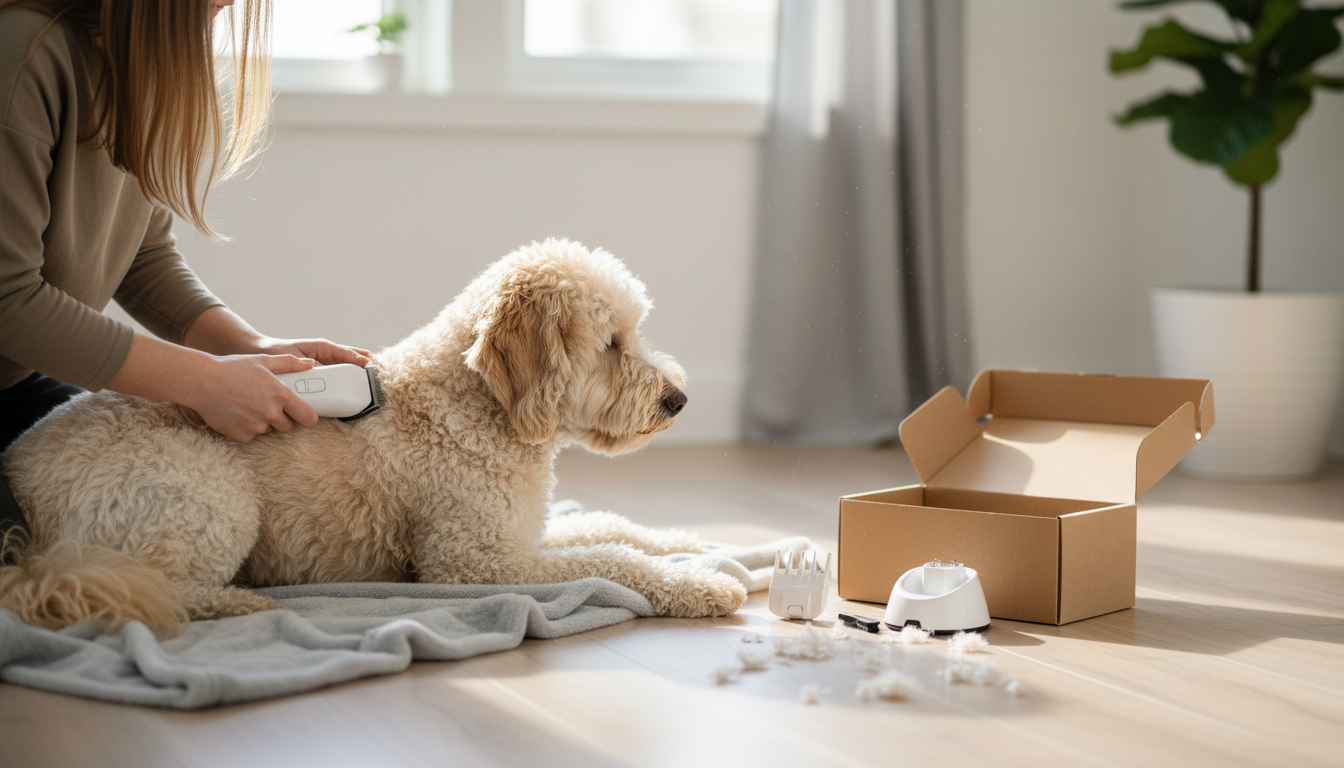
Best Dog Grooming Clippers for Doodles: Keeping Their Unique Coats Tidy
The Doodle Dilemma: Finding the Right Clippers for Their Unique Coats
Doodle breeds like Goldendoodles, Labradoodles, and Bernedoodles have captured hearts with their charming personalities and distinctive, often plush coats. While beautiful, these unique coats—ranging from wavy to tightly curled and typically dense—present specific grooming challenges that differ significantly from many other dog breeds. Their continuously growing hair is prone to matting and requires regular maintenance to stay healthy and comfortable.
Standard dog grooming clippers, designed for a wider variety of coat types, often fall short when faced with the density and texture of a Doodle's fur. Underpowered motors can struggle, leading to frustrating snagging or pulling, which can be uncomfortable for your dog and inefficient for the groomer. Additionally, the specific nature of these coats can cause clippers to overheat more quickly, posing a risk to the dog's skin.
This guide aims to equip Doodle owners, whether new to grooming or seeking to refine their techniques, with the knowledge needed to select appropriate clippers and blades. Our purpose is to help you confidently identify tools that offer the power, efficiency, and features essential for maintaining your Doodle's coat effectively and comfortably at home, minimizing common issues and ensuring a positive grooming experience for both you and your beloved companion.
Understanding Your Doodle's Coat: Why Specific Clippers Are Essential
Doodles, a popular crossbreed group including Goldendoodles, Labradoodles, and Bernedoodles, are celebrated for their distinctive coats. However, these unique textures and growth patterns also present specific grooming challenges that necessitate a thoughtful approach to clipper selection. Unlike many other breeds, a Doodle's coat is typically a blend of their parent breeds, resulting in variations that demand specialized tools.
Common Doodle coats generally fall into three categories:
- Fleece Coats: These are often soft, wavy to curly, and can range from fine to thick in density. They are typically low-shedding and have a plush, flowing feel.
- Wool Coats: Denser and more tightly curled, wool coats closely resemble a Poodle's texture. They are very low-shedding but can be exceptionally thick and prone to felting if not maintained.
- Hair Coats: Less common in Doodles specifically bred for low-shedding, these coats tend to be straighter, coarser, and may shed more.
Regardless of the specific type, a unifying characteristic of Doodle coats is their continuous growth and inherent density. This combination makes them highly susceptible to matting. Loose hairs, dirt, and debris easily become trapped within the dense, often curly or wavy strands, forming painful and tight mats close to the skin. These mats are not merely cosmetic; they can lead to significant discomfort, restrict air circulation, and create an environment ripe for skin irritation, hot spots, or infections.
To effectively manage these coats and prevent such issues, clippers must possess sufficient power and be paired with sharp, appropriate blades. Underpowered motors will struggle to cut through the density, leading to frustrating snagging and pulling that can be painful for your dog and prolong the grooming process. Sharp blades, conversely, ensure a clean, efficient cut, minimizing discomfort and reducing the risk of skin irritation. For common pet trims, blades such as a #5F or #4F are often utilized, while a #10 blade is standard for sanitary areas. For those aiming for longer, plush finishes, guide combs used over a #30 blade can help achieve desired lengths without cutting too short.
Ultimately, proper and regular grooming with the right clippers is paramount for a Doodle's health and comfort. It prevents the formation of painful mats, allows for routine inspection of the skin, and maintains overall coat health, ensuring your Doodle remains happy and well-cared for.
Key Features to Look for in Dog Clippers for Doodles
Selecting the right clippers is paramount for effectively managing a Doodle's unique coat, which can be dense, curly, and prone to matting. The ideal tool needs to combine power, precision, and comfort for both the dog and the groomer. Focusing on specific technical and ergonomic attributes can significantly improve the grooming experience and results.
-
Motor Power and Speed (RPM/SPM) Doodle coats demand clippers with robust motors capable of maintaining consistent power through thick, curly, or even slightly matted fur. A motor with a high number of strokes per minute (SPM) or rotations per minute (RPM) is crucial. Underpowered clippers can snag and pull hair, causing discomfort for your dog and leading to an uneven cut. Look for professional-grade motors designed for continuous use, as these are less likely to bog down or overheat when tackling a dense Doodle coat.
-
Corded vs. Cordless Operation Both corded and cordless clippers offer distinct advantages. Corded models typically provide consistent, uninterrupted power, which can be beneficial for long grooming sessions on large Doodles or for tackling very dense coats without concern for battery depletion. Cordless clippers, conversely, offer superior maneuverability and freedom of movement, reducing the risk of tripping over cords. However, for a large Doodle's full body groom, battery life is a critical consideration; some cordless units may require recharging mid-session, as observed in testing with large Goldendoodles. Cordless options are often noted for being quieter, which can be a significant benefit for sensitive dogs.
-
Noise and Vibration Levels Many Doodles can be sensitive to loud noises and vibrations, which can make grooming a stressful experience. Clippers designed with reduced noise and vibration levels contribute to a calmer environment for your dog and can lessen groomer fatigue during extended sessions. Quieter motors and well-balanced designs minimize operational noise and hand vibration, promoting a more positive association with grooming.
-
Blade Compatibility and Material Versatility in blade selection is essential for Doodles. Clippers that accept standard detachable blades (e.g., A5 style) allow you to switch between various lengths and types, such as a #10 for sanitary areas or #4F/#5F for body trims, and accommodate guide combs for longer, plush finishes. Blade material also matters: ceramic blades tend to stay cooler than steel, reducing the risk of "clipper burn" on your dog's skin, while high-carbon steel blades offer durability and sharpness. Proper blade maintenance, including cleaning and oiling, is vital to prevent pulling and overheating.
-
Ergonomics and Weight Grooming a Doodle can be a time-consuming task due to their coat density and size. Clippers designed with ergonomics in mind, featuring a comfortable grip and balanced weight, can significantly reduce hand and wrist fatigue during long grooming sessions. A lightweight design, coupled with low vibration, enhances control and comfort, allowing for more precise and efficient grooming.
Essential Blades and Guard Combs for Effective Doodle Grooming
Successfully grooming a Doodle's unique coat requires more than just powerful clippers; the specific blades and guard combs used are equally critical for achieving desired lengths, preventing discomfort, and maintaining coat health. Doodles' dense, often curly or wavy coats can easily snag or mat if the wrong tools or techniques are employed. Understanding the function and application of various blade types and guard combs is fundamental for a smooth, efficient, and comfortable grooming experience.
Different blades serve distinct purposes, tailored to the coat's condition and the desired outcome:
- Finish Blades (F-blades): Identified by an "F" suffix (e.g., #5F, #4F), these blades have closely spaced teeth that create a smooth, uniform cut. They are ideal for achieving a polished, even finish across the body of a Doodle, especially after any bulk has been removed.
- Skip-Tooth Blades: These blades feature alternating long and short teeth. They are particularly useful for initial bulk removal on very dense or slightly matted Doodle coats, as the wider spacing allows them to glide through the fur more easily than a finish blade. However, they should be used with caution and typically followed by a finish blade for an even look.
For specific grooming tasks on Doodles, certain blade sizes are commonly recommended:
- #10 Blade: This blade provides a short, clean cut, making it essential for hygienic areas. It is widely used for trimming around the sanitary areas (perianal region), paw pads, and often for the face, particularly around the eyes and muzzle, where shorter hair helps prevent matting and keeps these areas clean.
- #5F or #4F Blades: These blades leave a longer, yet still manageable, length. They are popular choices for common pet trims on the body of a Doodle, offering a clean appearance without being excessively short. The "F" ensures a smooth finish, which is desirable for the plush texture of many Doodle coats.
To achieve longer, fluffier styles, such as the popular 'teddy bear' look, guard combs are indispensable. These plastic or metal attachments fit over a metal clipper blade, typically a #30 or #40, which acts as the cutting base. The guard comb then dictates the final hair length, allowing you to leave lengths ranging from ⅜" to 1" or even longer. When using guard combs on a Doodle, it's crucial that the coat is thoroughly brushed, free of mats, and clean, as tangles will prevent the comb from gliding through smoothly, leading to an uneven cut or pulling.
Regardless of the blade type or size, proper maintenance is paramount for effective Doodle grooming and your dog's comfort. Sharp blades cut cleanly, preventing painful pulling or snagging on dense or curly coats. Regular cleaning, which involves brushing out trapped hair and disinfecting, is vital for hygiene. Oiling blades before and during use reduces friction and heat buildup, extending blade life and preventing "clipper burn" on your dog's skin. Additionally, Doodles' thick coats can cause blades to heat up quickly; having cooling sprays on hand or swapping between multiple blades allows them to cool, ensuring your dog remains comfortable throughout the grooming process.
Navigating Common Clipper Challenges When Grooming Doodles
Grooming a Doodle at home can be rewarding, but their unique coats often present specific challenges when using clippers. Understanding these potential issues and how to mitigate them is key to a smooth and stress-free grooming experience for both you and your dog.
-
Preventing Clipper and Blade Overheating Doodle coats are dense, and continuous clipping can generate significant heat. Overheated blades can cause discomfort or even burn your dog's skin.
- Causes: Dull blades require more effort from the clipper motor and create increased friction. Prolonged, uninterrupted use also contributes to heat buildup.
- Solutions:
- Ensure blades are sharp. Dull blades drag and create more friction.
- Use cooling sprays specifically designed for clipper blades at regular intervals.
- Keep multiple blades on hand to rotate them. This allows one blade to cool down while another is in use.
- Take frequent short breaks during longer grooming sessions to allow both the clippers and blades to cool.
-
Avoiding Pulling and Snagging A common and unpleasant issue, pulling and snagging can make a dog averse to grooming. This often stems from improper coat preparation or blade selection.
- Causes: Matted, tangled, or dirty coats are the primary culprits. Incorrect blade sizes that are too fine for dense fur or moving the clippers too quickly can also cause hair to get caught.
- Solutions:
- Thoroughly bathe and dry your Doodle before clipping.
- Brush out all tangles and mats completely. Clippers should only be used on a clean, dry, and tangle-free coat.
- Select appropriate blades for your Doodle's coat type and desired length. For common pet trims, blades like a #5F or #4F are often suitable.
- Move clippers steadily and smoothly through the coat, avoiding jerky movements.
-
Managing Cordless Clipper Battery Life For large Doodles or those with very thick coats, a full body groom can be a lengthy process, potentially exceeding the battery life of some cordless clippers.
- Challenge: The sheer volume and density of a Doodle's fur can quickly drain battery power, sometimes requiring a halt mid-groom.
- Strategies:
- Always start with a fully charged clipper.
- Consider the total grooming time needed for your dog and compare it to the clipper's advertised run time.
- For extensive grooms, plan to charge the clippers between sections or have a backup battery if your model allows.
- Some owners opt for corded clippers for full body grooms to avoid battery constraints, reserving cordless models for touch-ups.
-
Addressing Dog Sensitivity to Noise and Vibration Many Doodles, especially those new to grooming, can be sensitive to the sound and feel of clippers. This can lead to anxiety and resistance.
- Triggers: The buzzing noise and tactile vibration of clippers can be startling or uncomfortable.
- Acclimation Tips:
- Introduce clippers gradually. Start by simply turning them on near your dog without touching them.
- Use positive reinforcement with treats and praise during and after exposure.
- Begin with very short grooming sessions in a calm environment.
- Opt for clippers specifically noted for lower noise and vibration levels, as some cordless models tend to be quieter than their corded counterparts.
Making Your Decision: Choosing the Best Clippers for Your Doodle and Lifestyle
Selecting the right grooming clippers for your Doodle involves more than just picking a popular model. It requires a thoughtful assessment of your dog's specific coat characteristics, your grooming habits, and your long-term investment perspective. Understanding these factors will help you make a confident choice that ensures effective, comfortable grooming sessions.
Tailoring Clippers to Your Doodle's Coat and Size
A Doodle's coat density and body size are primary determinants for clipper power and blade selection. Larger Doodles, especially those with very dense or tightly curled coats, demand clippers with robust motors. These powerful motors are crucial for cutting through thick fur without snagging or pulling, which can be uncomfortable for your dog and lead to an uneven cut. Rotary motors, often found in professional-grade clippers, provide consistent power and are generally well-suited for dense Doodle coats.
Blade choice is equally critical. For general body trims on Doodles, common blade sizes like #5F or #4F are often recommended to achieve a plush, manageable length. For sanitary areas, paw pads, and intricate detailing around the face, a #10 blade is typically used. Ensure the clippers you consider are compatible with a range of blade sizes or come with suitable attachments for your desired cut.
Assessing Your Grooming Routine and Expertise
Your experience level and how often you plan to groom will influence the ideal clipper features.
- Beginner Groomers: You might prioritize lighter, quieter clippers that are easier to handle. Models with lower vibration can also help keep your Doodle calmer during grooming. Cordless options offer maneuverability without the hassle of a cord, which can be beneficial when learning.
- Experienced Groomers or Frequent Grooming: If you plan to groom your Doodle regularly or for extended periods, durability and consistent performance become paramount. Corded clippers often provide continuous power without battery concerns, which can be advantageous for large Doodles requiring longer grooming sessions. For cordless models, look for those with reliable battery life to avoid interruptions. Some models have been noted to require recharging mid-groom for large, heavily coated dogs.
Weighing Initial Cost Against Long-Term Value
The initial price of clippers can vary significantly, but focusing solely on the lowest cost might overlook long-term expenses and performance issues.
- Initial Investment: Higher-priced clippers often feature more powerful motors, superior blade quality, and more durable construction. These components contribute to a smoother grooming experience, less pulling, and a longer lifespan for the tool.
- Durability and Performance: Cheaper clippers may struggle with dense Doodle coats, leading to overheating, frequent snagging, and a shorter operational life. This can result in the need for more frequent replacements or frustrating grooming sessions. Investing in a more robust model can save money and hassle over time by reducing the need for repairs or early replacement.
- Replacement Parts: Consider the availability and cost of replacement blades and batteries. High-quality blades stay sharper longer but will eventually need replacement or sharpening.
Critical Considerations Before Purchase
Before finalizing your decision, ask yourself these key questions to ensure the clippers align with your Doodle's needs and your grooming style:
- Is the motor powerful enough for my Doodle's coat density? Ensure it can handle thick, curly fur without bogging down.
- What blade types are compatible, and are they readily available? Confirm you can achieve the desired coat length and perform detailed work.
- Does the clipper's noise and vibration level suit my Doodle's temperament? Quieter models can reduce stress for sensitive dogs.
- Will the power source (corded or cordless) support my typical grooming duration? Consider battery life for cordless options if you have a large Doodle.
- Is the clipper comfortable to hold for extended periods? Ergonomics can prevent hand fatigue during long grooming sessions.
- What is the reputation for durability and customer support? This can indicate the long-term value and reliability of your investment.
Frequently Asked Questions About Grooming Doodles
Doodle owners often encounter specific questions when selecting clippers and establishing a grooming routine. Addressing these common concerns can help ensure a smoother, more effective grooming experience for both you and your dog.
What blade size is best for a 'teddy bear' cut on my doodle?
A "teddy bear" cut typically aims for a plush, longer finish while still keeping the coat manageable. For this style, you'll generally use a longer blade or, more commonly, an attachment comb (also known as a guide comb) over a shorter blade.
- For a shorter "teddy bear" look (around 1/4 to 1/2 inch): A #5F or #4F blade can be used directly. The "F" indicates a finish blade, designed to leave a smooth cut.
- For a longer, fluffier "teddy bear" look (⅜ to 1 inch or more): Use a metal or plastic guard comb placed over a #30 or #10 blade. The guard comb dictates the final length, allowing the underlying blade to feed the hair through without cutting it too short. This approach is favored for achieving plush lengths.
Experimentation with different guard comb lengths is often necessary to find the ideal look for your specific Doodle's coat density and curl pattern.
How often should I groom my doodle with clippers?
The frequency of clipper grooming for your Doodle depends heavily on their coat type, lifestyle, and your desired length. Doodles' continuously growing coats are prone to matting, making regular maintenance crucial.
- General Guideline: Many Doodle owners find that a full body clip every 4 to 8 weeks is necessary to prevent matting and maintain a healthy coat.
- Between Full Clips: Regular brushing and spot trims (e.g., around the eyes, paws, and sanitary areas) are essential. If you prefer a longer coat, more frequent brushing and professional intervention may be required to prevent tangles.
- Factors to Consider: Doodles with very dense, wool-like coats or those who spend a lot of time outdoors may require more frequent grooming than those with looser, fleece coats or a more sedentary lifestyle.
Consistent grooming helps prevent painful matting, which can lead to skin issues and discomfort for your dog.
My clippers are pulling my doodle's hair; what's wrong?
Clippers pulling hair can be uncomfortable for your Doodle and frustrating for you. Several factors can contribute to this issue:
- Dull Blades: The most common reason for pulling is dull clipper blades. Sharp blades cut cleanly, while dull blades snag and pull.
- Dirty or Matted Coat: Clippers struggle to glide through dirty, greasy, or matted fur. Always ensure your Doodle's coat is clean, completely dry, and thoroughly brushed out before clipping. Even small mats can cause significant pulling.
- Insufficient Clipper Power: If your clippers lack the motor power to handle your Doodle's dense or thick coat, they may bog down and pull rather than cut efficiently.
- Incorrect Technique: Moving the clippers too quickly, against the grain of the hair, or at an improper angle can also lead to pulling. Maintain a steady, even stroke.
- Overheating Blades: Hot blades can irritate the skin, making the dog more sensitive and prone to reacting as if their hair is being pulled. Ensure blades are cool and lubricated.
Regular blade maintenance, proper coat preparation, and using clippers suitable for dense coats can help mitigate pulling.
Is a corded or cordless clipper better for doodles?
Both corded and cordless clippers offer distinct advantages and trade-offs for grooming Doodles. The "better" option often depends on your specific needs and grooming environment.
-
Corded Clippers:
- Pros: Generally offer consistent, sustained power without worrying about battery life, which can be beneficial for Doodles with very dense or large coats that require longer grooming sessions.
- Cons: Limited by cord length and can restrict movement, potentially making it harder to maneuver around a wiggly dog.
-
Cordless Clippers:
- Pros: Provide excellent maneuverability and freedom of movement, which can be ideal for reaching awkward areas or grooming an active dog. Many cordless models are also designed to be quieter, potentially reducing stress for noise-sensitive Doodles.
- Cons: Battery life can be a limiting factor, especially for large Doodles or those with very thick coats that require extended clipping time. Some models may require recharging mid-groom if the battery capacity is insufficient. Performance can sometimes diminish as the battery drains.
For many Doodle owners, a powerful cordless clipper with a decent battery life offers a good balance of convenience and performance, particularly for touch-ups or smaller Doodles. However, for full body grooms on large, dense-coated Doodles, a corded model can provide reliable, uninterrupted power.
Empowering Your Doodle's Grooming Journey
Navigating the unique grooming demands of Doodle coats requires a thoughtful approach, particularly when selecting clippers and blades. The varied textures, from wavy fleece to dense wool, necessitate tools capable of consistent power, efficient cutting, and effective heat management. Understanding these specific requirements, rather than relying on general-purpose grooming tools, is fundamental to maintaining your Doodle's coat health and comfort.
Choosing clippers and blades specifically designed for thick, curly, or continuously growing coats directly translates to a more positive grooming experience for both you and your dog. Appropriate tools minimize common frustrations like snagging, pulling, and overheating, which can otherwise make grooming a stressful ordeal. This careful selection helps ensure a smoother, quicker trim, reducing anxiety for your Doodle and making the process more manageable for you.
With the knowledge gained about motor types, blade considerations, and the nuances of Doodle coat care, you are now equipped to confidently evaluate and select grooming clippers. Apply these insights to match the right tools to your unique Doodle's coat type and temperament, fostering a consistent grooming routine that supports their well-being and keeps their distinctive coat tidy and healthy.


More in Dog Grooming Clippers
View All
Preparing Your Dog for Grooming with Clippers: A How-To Guide for Stress-Free Sessions
Compare how to dog grooming with clippers with a practical informational SEO brief, decision criteria, FAQs, and publishing checks before you commit.
Troubleshooting Common Issues When Grooming Your Dog with Clippers
Compare grooming a dog with clippers with a practical informational SEO brief, decision criteria, FAQs, and publishing checks before you commit.
Country Clippers for Dog Grooming: Built for Durability and Demanding Use
Compare country clippers dog grooming with a practical informational SEO brief, decision criteria, FAQs, and publishing checks before you commit.