Essential Dog Grooming Shears: A Complete Guide for Every Home Groomer
Mastering Home Grooming: Your Guide to Dog Grooming Shears
Regular grooming is fundamental for a dog's overall health and well-being, extending beyond just appearance to include skin health, coat condition, and comfort. For home groomers, achieving these benefits efficiently and safely hinges on using the right tools. While various grooming implements exist, dog grooming shears are pivotal for precision work, shaping, and maintaining specific coat lengths and styles.
The quality and type of shears directly influence the outcome of your grooming efforts, transforming a potentially frustrating task into a more manageable one. Employing shears designed for specific tasks can help prevent uneven cuts, reduce pulling on your dog's coat, and minimize the risk of accidental nicks, contributing to a more professional-looking finish at home.
This guide aims to demystify the selection process for dog grooming shears. We will explore how to match different shear types to your dog's unique coat, specific grooming tasks, and your personal comfort, ensuring you can confidently choose tools that support effective, safe, and stress-free at-home grooming sessions.
Decoding Dog Grooming Shears: Types and Their Uses
Effective home grooming relies on selecting the right tools for specific tasks and your dog's coat. Dog grooming shears are not one-size-fits-all; understanding the distinct functions of each type empowers you to achieve cleaner lines, smoother blends, and safer trims. Each shear is designed with a particular purpose, influencing how it interacts with the coat and the finish it provides.
-
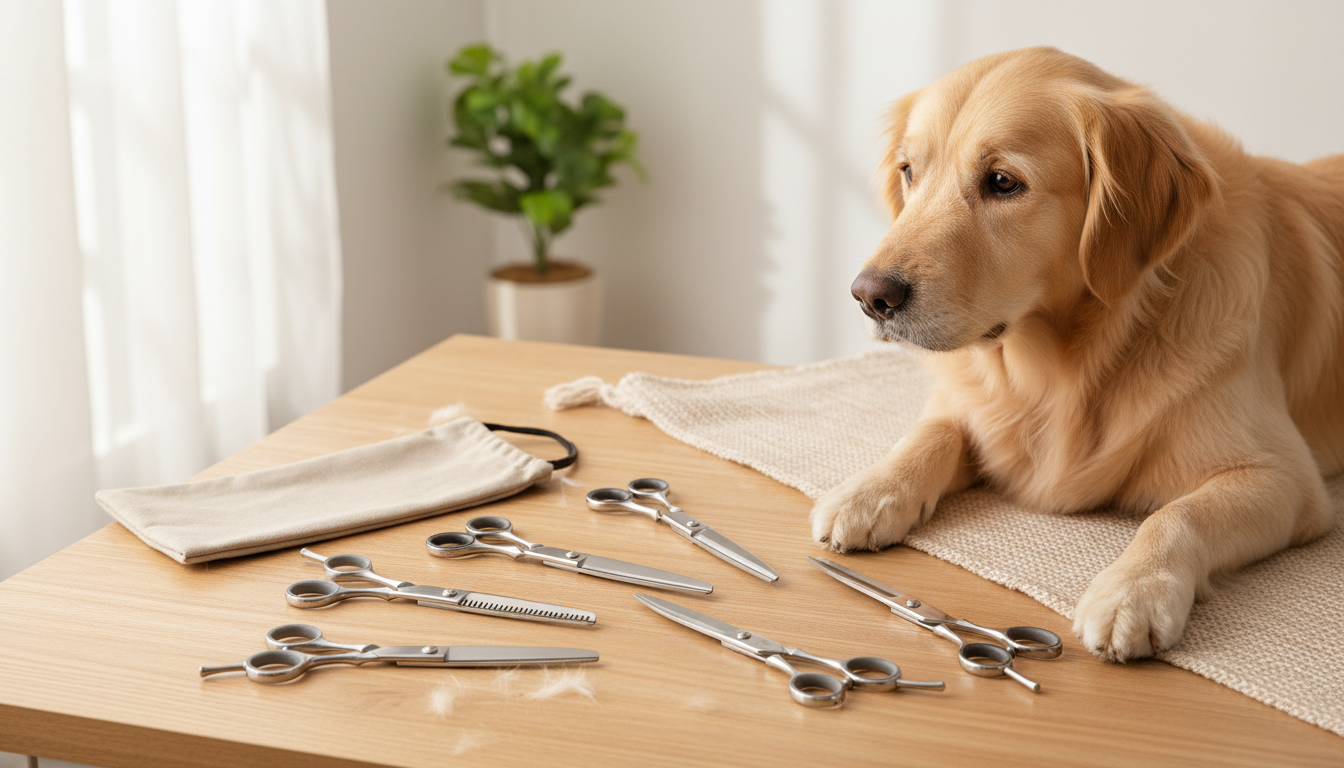
Straight Shears These are the most fundamental and versatile shears in any grooming kit, characterized by their straight blades. They are essential for foundational cuts and achieving defined shapes.
- Purpose: General cutting, creating crisp lines, and initial bulk removal.
- Ideal Uses:
- Establishing overall coat length.
- Trimming body hair for a uniform appearance.
- Creating clean, sharp edges on legs, paws, or the body.
- Removing significant amounts of hair in larger sections.
-
Curved Shears Distinguished by their subtly arced blades, curved shears are designed to follow the natural contours of a dog's body, facilitating a more sculpted and rounded finish.
- Purpose: Shaping, blending, and creating smooth, rounded looks.
- Ideal Uses:
- Shaping heads, topknots, and tails.
- Creating rounded paws or bellies.
- Blending different coat lengths seamlessly.
- Working around curves of the body, such as hips or shoulders.
-
Thinning Shears These shears feature one solid blade and one blade with teeth, designed to remove a portion of hair with each cut without significantly shortening the overall length. They are crucial for refining the coat's texture and density.
- Purpose: Reducing bulk, blending harsh lines, and creating a natural, softer finish.
- Ideal Uses:
- Thinning thick or dense coats to reduce volume.
- Softening clipper lines or scissor marks for a blended look.
- Creating a more natural, feathered appearance on edges.
- Adding texture to a coat without making it noticeably shorter.
-
Specialty Shears (Bull Nose/Safety) These shears are characterized by their rounded or blunt tips, prioritizing safety in sensitive areas. The absence of sharp points minimizes the risk of accidental injury to the dog.
- Purpose: Safe and precise trimming in delicate or hard-to-reach areas.
- Ideal Uses:
- Trimming hair around the eyes to prevent irritation.
- Grooming fur on and around the paws.
- Working on other sensitive facial areas or private parts where pointed shears pose a risk.
Choosing the Right Shears: Essential Buying Considerations for Home Groomers
Selecting dog grooming shears involves more than just picking up a pair of scissors; it's about matching the tool to the task, your dog's coat, and your comfort. Understanding the critical features helps home groomers make informed decisions that impact both grooming effectiveness and the longevity of their tools.
-
Blade Material and Quality The foundation of any good shear lies in its blade material. High-quality stainless steel, often sourced from regions known for metallurgy like Japan or Germany, is preferred for its durability and ability to hold a sharp edge. Better steel alloys contribute to shears that retain their sharpness longer, reducing the need for frequent sharpening and ensuring cleaner cuts that are less likely to pull on your dog's fur.
-
Shear Size and Length Shear length is measured from the tip of the blade to the end of the longest finger hole. The appropriate size depends on the dog's size, coat type, and the specific grooming area.
- Shorter Shears (e.g., 4-6 inches): Ideal for delicate work around the face, paws, ears, and for smaller dog breeds, offering greater control and precision.
- Medium Shears (e.g., 6.5-8 inches): Versatile for general body work, shaping, and for most medium-sized dogs.
- Longer Shears (e.g., 8.5+ inches): Best for larger breeds, bulk hair removal, and achieving smooth, flowing lines on extensive body areas.
-
Ergonomics and Handle Design Comfort and control are paramount, especially during longer grooming sessions. Ergonomic handle designs reduce hand fatigue and strain, which is crucial for preventing discomfort and potential injury over time.
- Offset Handles: Position the thumb hole slightly shorter than the finger hole, promoting a more natural hand position and reducing wrist strain.
- Level/Straight Handles: Offer a traditional feel, with both finger holes aligned.
- Crane Handles: Provide the most offset, allowing for an even straighter wrist position.
- Finger Rests and Inserts: Removable finger inserts customize the fit for different finger sizes, while a fixed or removable finger rest provides stability and leverage.
-
Tension System The tension system, typically a screw or dial, controls how tightly the shear blades meet. Proper tension is vital for a clean cut; if too loose, hair can fold between the blades, leading to uneven results or pulling. If too tight, it causes unnecessary friction and premature wear. An adjustable system allows you to fine-tune the tension to suit different coat types and maintain optimal cutting performance.
-
Edge Type The grind of the shear blade's edge significantly impacts its cutting action and suitability for various coats.
- Convex Edge: Characterized by a razor-sharp, fine edge, ideal for precise, smooth cutting through fine to medium coats. These are very sharp but can be more delicate.
- Bevel Edge: A more durable, robust edge, suitable for general cutting and thicker, coarser coats. While not as razor-sharp as convex, they offer good longevity and are more forgiving.
-
Cost vs. Value The price of grooming shears can vary widely, reflecting differences in blade material, craftsmanship, and ergonomic design. While it's tempting to opt for the least expensive option, consider the long-term value. Higher-priced shears often feature superior steel, better balance, and more comfortable ergonomics, leading to a more pleasant grooming experience, better results, and a longer lifespan. Balancing your budget with the quality and features that directly benefit your grooming needs and comfort is key to a worthwhile investment.
Tailoring Your Tools: Matching Shears to Your Dog's Coat and Grooming Style
Selecting the appropriate dog grooming shears is a critical step for successful at-home grooming, directly impacting the quality of the cut, your dog's comfort, and your efficiency. The ideal shear choice depends on your dog's coat characteristics, the specific grooming task at hand, and your own skill level. Mismatched tools can lead to uneven results, discomfort for your dog, and increased grooming time.
-
For General Trimming and Basic Maintenance For home groomers starting out or those focused on routine upkeep, a versatile pair of straight shears is often the foundational tool. These shears are excellent for establishing overall coat length and maintaining a neat appearance. Their straightforward design makes them relatively easy to learn, allowing for clean cuts on most coat types for basic trims. When choosing, consider a medium length (e.g., 6.5 to 7.5 inches) for a good balance of control and reach. The trade-off for simplicity is that achieving very soft lines or intricate shapes may require more effort or a different tool.
-
For Thick, Double, or Matted Coats Challenging coats require shears that can cut through density without snagging or pulling, which can be painful for your dog. For significant bulk reduction or navigating thick undercoats, longer straight shears can offer better leverage and cover more area efficiently. For very dense or double coats, some groomers find thinning shears with fewer, wider-spaced teeth helpful for removing bulk while maintaining a natural look. The primary consideration here is blade sharpness and durability to ensure a clean cut through challenging hair, minimizing stress on both the groomer and the dog. Using dull or inappropriate shears on these coats risks incomplete cuts and discomfort.
-
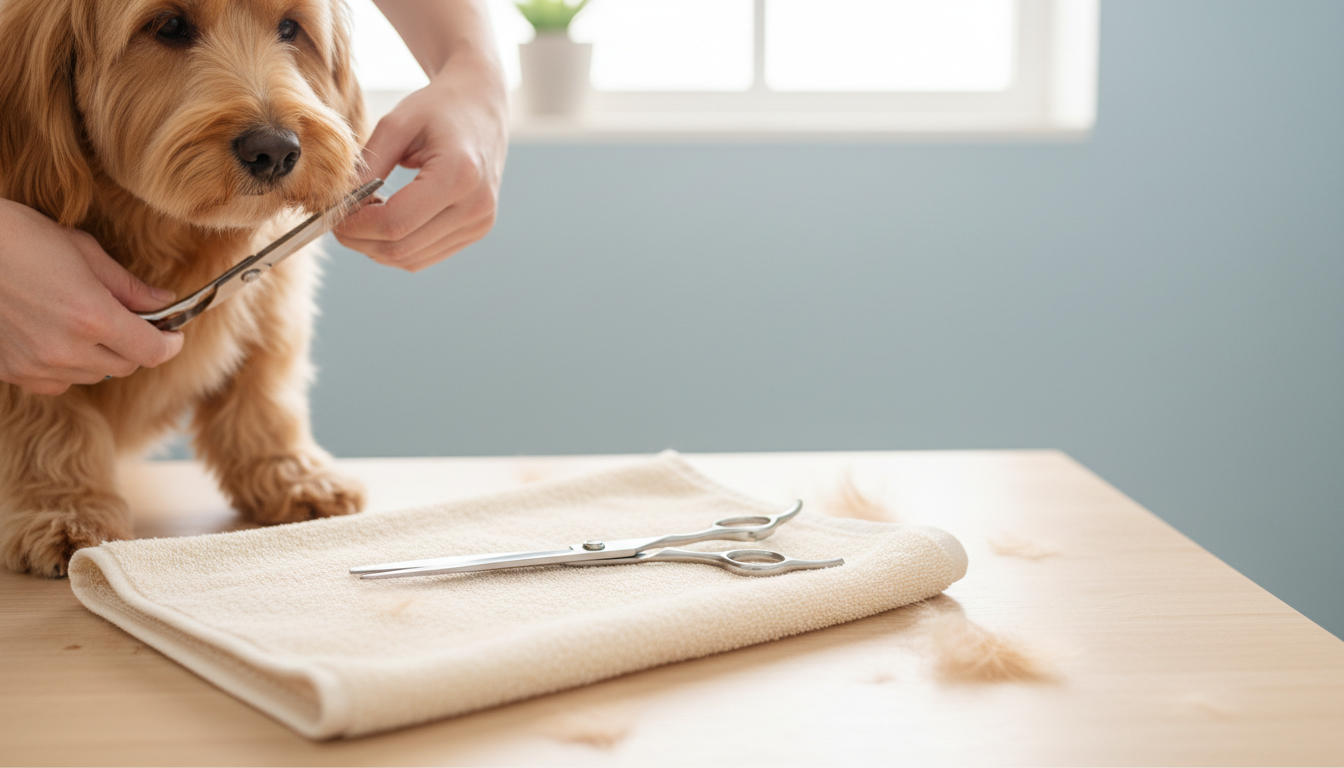
For Delicate Areas and Detail Work Precision is paramount when grooming around sensitive body parts like the eyes, ears, paws, and sanitary areas. For these tasks, smaller, shorter straight shears (e.g., 4.5 to 5.5 inches) provide enhanced control and maneuverability. Additionally, shears with rounded or "bull nose" tips are a key safety feature, designed to minimize the risk of accidental nicks or pokes in these vulnerable areas. While these shears offer safety, their shorter blades mean they are not practical for larger body areas, highlighting the need for specialized tools for specific tasks.
-
For Styling and Breed-Specific Cuts Achieving specific breed standards or desired stylistic shapes often requires a combination of specialized shears. Curved shears are indispensable for creating rounded contours, such as shaping a poodle's topknot, rounding paws, or defining the curve of a dog's chest or hindquarters. Thinning or texturizing shears, with their notched blades, are used to soften harsh lines, blend different coat lengths seamlessly, and add texture without drastically reducing length. These tools allow for a more sculpted and natural finish, but mastering their use requires practice to avoid creating choppy or uneven areas.
-
Considering Your Skill Level Your comfort and experience level as a home groomer should guide your initial shear purchases. Beginners are often best served by starting with one or two versatile tools, such as a good quality pair of straight shears and perhaps a safety-tipped pair for delicate areas. This approach allows you to develop fundamental cutting techniques and build confidence without being overwhelmed by too many specialized tools. As your skills advance and you become more familiar with your dog's coat and grooming needs, you can gradually expand your collection to include curved shears, various thinning shears, or longer straight shears to tackle more complex styling or coat types. Investing in ergonomic designs, even for basic shears, can also prevent hand fatigue and improve control over longer grooming sessions.
Extending the Life of Your Shears: Care and Maintenance Tips
The longevity and performance of your dog grooming shears depend significantly on consistent care and proper maintenance. Treating your shears as precision instruments helps ensure they remain sharp, functional, and safe for your dog, ultimately saving you time and money in the long run.
Daily Cleaning and Oiling Practices
After every grooming session, a thorough cleaning and light oiling are crucial to prevent damage and maintain cutting efficiency. Dog hair, even when dry, can retain moisture, which can lead to corrosion on metal blades and within the pivot screw mechanism if left unchecked.
- Remove Hair Thoroughly: Begin by wiping down the shear blades with a soft cloth or brush to remove all traces of hair. Ensure no stray hairs are caught between the blades or around the pivot screw.
- Clean and Disinfect: Use a shear-specific cleaning spray or an alcohol wipe to clean the blades and handles. This helps remove oils, dirt, and any potential bacteria, contributing to hygiene.
- Apply Shear Oil: Place a single drop of shear oil at the pivot screw and another small drop along the inside edge of each blade.
- Distribute Evenly: Gently open and close the shears several times to distribute the oil across the moving parts and blade surfaces.
- Wipe Excess: Use a clean, soft cloth to wipe away any excess oil from the blades and handles. This prevents oil buildup and attracts less debris.
Safeguarding Blades Through Proper Storage
How you store your shears when not in use directly impacts their sharpness and structural integrity. Protecting the delicate cutting edges from accidental damage is paramount.
- Protective Casing: Always store shears in their original protective case, a dedicated shear pouch, or a grooming tool roll. This prevents them from bumping against other tools or hard surfaces.
- Dry Environment: Keep shears in a dry, temperate location, away from high humidity or extreme temperature fluctuations, which can promote rust or degrade materials.
- Blade Position: Store shears with the blades closed or slightly ajar, but never fully open and exposed, to minimize the risk of nicks or dulling.
- Isolated Storage: Avoid tossing shears into a drawer with other metal objects. Direct contact can easily nick or bend the fine edges.
Recognizing When to Sharpen or Replace
Even with diligent care, shears will eventually dull. Recognizing the signs of a dull blade helps you decide whether sharpening or replacement is the next step.
- Signs of Dullness: If your shears begin to "fold" or "push" hair rather than cutting cleanly, require excessive force, or jam frequently, they are likely dull. A sharp shear should slice through hair smoothly with minimal effort.
- Professional Sharpening: For optimal results, seek professional sharpening services that specialize in grooming shears. These experts use specific techniques to maintain the precise angles of the blades without damaging the shear's integrity. Attempting to sharpen them yourself with general sharpeners can ruin the specialized edge.
- When to Replace: Consider replacing shears if they have sustained significant damage, such as deeply nicked blades that cannot be corrected by sharpening, bent tips, or if professional sharpening no longer restores their cutting performance.
Avoiding Common Shear Damage Pitfalls
Certain actions can quickly compromise the effectiveness and lifespan of your grooming shears. Being mindful of these common mistakes can prevent premature wear and tear.
- Dropping Shears: A single drop, even from a short height, can misalign the blades, create nicks, or bend the tips, severely impacting cutting performance.
- Cutting Non-Hair Materials: Never use your grooming shears for anything other than dog hair. Cutting paper, fabric, plastic, or other materials will rapidly dull or damage the delicate cutting edge.
- Improper Tension: The tension screw on your shears should allow the blades to close smoothly without excessive resistance or looseness. Too tight, and it causes unnecessary wear; too loose, and it will fold hair. Adjust it carefully according to manufacturer guidelines.
- Forcing Cuts: If shears are struggling to cut through a section of hair, do not force them. This could indicate dullness, a coat too thick for the shear type, or matting. Forcing can damage the shear and cause discomfort to the dog.
Your Home Grooming Shear Checklist: Making the Right Choice
Selecting the ideal dog grooming shears involves a systematic evaluation of your specific needs, your dog's characteristics, and your personal comfort. This checklist condenses the key decision points to guide you toward a confident and informed purchase, ensuring your tools support effective and safe home grooming.
-
Assess Your Dog's Coat Profile:
- What is your dog's primary coat type (e.g., fine, thick, curly, double-coated, silky)? This dictates the required sharpness and potential need for specialized blades.
- What is your dog's size? Smaller dogs may benefit from shorter shears for precision, while larger dogs might require longer blades for efficiency.
-
Identify Your Core Grooming Tasks:
- Do you primarily need to remove bulk coat and establish overall length? (Consider straight shears.)
- Is your main goal to create smooth, rounded shapes and follow body contours? (Curved shears are often suitable.)
- Are you aiming to blend lines, reduce volume, or soften harsh edges? (Thinning or blending shears may be necessary.)
- Do you require precision for delicate areas like paws, face, or ears? (Smaller straight shears or bull-nose safety shears could be beneficial.)
-
Prioritize Ergonomics and Personal Comfort:
- How do the shears feel in your hand? Improperly fitting shears can lead to hand strain and fatigue during extended grooming sessions.
- Does the weight and balance feel comfortable for your hand size and grip style?
- Are the finger holes appropriately sized, or can they be adjusted with inserts?
-
Set a Realistic Budget:
- While shear prices vary widely, understand that higher cost does not always equate to better performance for your specific needs. Focus on durability and suitability rather than just price.
- Consider the value over time: well-maintained shears, even moderately priced ones, can offer good longevity.
-
Commit to Proper Maintenance:
- Are you prepared for daily cleaning and oiling of your shears to prevent rust and maintain sharpness? Moisture from hair, even dry hair, can affect blades.
- Factor in the cost and frequency of professional sharpening, which is essential for preserving the cutting edge and extending the life of your investment.
Frequently Asked Questions About Dog Grooming Shears
Navigating the array of dog grooming shears can raise several questions for home groomers. Understanding the nuances of different tools, their care, and common misconceptions is key to making informed decisions and ensuring safe, effective grooming sessions.
What's the practical difference between straight, curved, and thinning shears?
Each type of shear serves a distinct purpose in achieving a well-groomed finish:
- Straight Shears: These are versatile tools for general cutting, establishing initial coat length, and creating clean, defined lines on areas like legs or the body. They are fundamental for most basic trims.
- Curved Shears: With their arced blades, curved shears are designed to follow the natural contours of a dog's body. They excel at shaping rounded areas such as heads, paws, and hips, allowing for a smoother, more sculpted appearance than straight shears can achieve.
- Thinning Shears: Featuring one bladed edge and one serrated (toothed) edge, thinning shears remove a small percentage of hair with each cut. They are primarily used for blending different coat lengths, softening harsh lines, reducing bulk without significantly shortening the coat, and creating a more natural, feathered look.
How do I choose the right size shears for my dog?
Selecting the appropriate shear length is crucial for both control and safety. Consider your dog's size, coat type, and the specific area you're grooming:
- Smaller Shears (4.5 to 6 inches): Ideal for delicate work around the face, ears, paws, and sanitary areas, especially on small to medium-sized breeds. Their shorter blades offer greater precision and control in tight spaces.
- Medium Shears (6 to 8 inches): A good all-around length for general body grooming on most breeds. They provide a balance of control for detail work and efficiency for larger sections.
- Longer Shears (8 to 10 inches): Best suited for larger dogs or for efficiently removing bulk from long, dense coats. These shears cover more area with each cut, reducing grooming time but requiring a steady hand.
Ultimately, the "right" size also depends on your hand comfort and confidence in handling the shears.
How often should I clean and oil my grooming shears?
Consistent maintenance is vital for the longevity and performance of your shears.
- Cleaning: After every grooming session, thoroughly clean your shears to remove all hair, dander, and moisture. Use a soft cloth or brush, and a shear-specific cleaning solution if recommended by the manufacturer. Residual hair and moisture can lead to rust and dulling.
- Oiling: Apply a drop or two of high-quality shear oil to the pivot screw and along the blades after cleaning, especially if they have been exposed to water. This lubricates the blades, prevents rust, and ensures smooth operation. For home groomers, oiling weekly or every few uses is generally sufficient, depending on frequency of use. Proper storage in a protective case also helps maintain their condition.
Are expensive shears always better?
Not necessarily. While higher-priced shears often feature superior materials (like Japanese steel) and craftsmanship, leading to sharper, more durable edges and better ergonomics, cost does not guarantee the best fit for every home groomer. A shear's effectiveness is also dependent on:
- Material Quality: Look for shears made from high-quality stainless steel, which offers better edge retention and rust resistance.
- Ergonomics: The way the shears feel in your hand is paramount. Poorly fitting shears can cause discomfort and reduce control, regardless of their price.
- Maintenance: Even the most expensive shears will perform poorly without proper cleaning and oiling. A well-maintained mid-range shear can outperform a neglected high-end one. Focus on finding shears that are comfortable, sharp, and suitable for your dog's coat type and your grooming tasks, rather than solely on the price tag.
Can I use human scissors for dog grooming?
It is generally not recommended to use human scissors for dog grooming. Dog grooming shears are specifically designed with features that make them safer and more effective for canine coats:
- Blade Design: Dog grooming shears often have thicker, more robust blades to handle dense, coarse, or fine dog hair without bending or dulling quickly. Human scissors are typically designed for thinner, less varied hair textures.
- Safety Features: Many dog grooming shears feature rounded or blunt tips, particularly for use around sensitive areas like the eyes and paws. This design significantly reduces the risk of accidental nicks or pokes, which pointed human scissors can easily cause.
- Ergonomics: Dog grooming shears are designed for the repetitive motions and varied angles required when grooming a dog, often featuring offset handles or swivel thumbs for reduced hand strain. Using inappropriate tools can lead to uneven cuts, pulled hair, discomfort for your dog, and increased risk of injury.
Equipping Your Grooming Toolkit for Success
Embarking on the journey of home dog grooming is a rewarding commitment, and the foundation of that success lies in the intelligent selection of your tools. This guide has aimed to illuminate the nuances of dog grooming shears, emphasizing that an informed decision about these essential instruments is paramount. Understanding the distinct roles of straight, curved, thinning, and safety shears, and how they interact with different coat types and grooming tasks, empowers you to approach each session with confidence and precision.
Choosing the right shears is more than just acquiring a tool; it's an investment in better grooming outcomes and a more positive experience for both you and your pet. Properly selected and maintained shears contribute to safer handling, reduce stress for your dog, and help achieve the desired aesthetic and hygienic results. They minimize pulling, allow for cleaner cuts, and ultimately make the grooming process more efficient and enjoyable.
As you continue to refine your home grooming skills, remember that every successful snip builds on the knowledge you've gained. With careful consideration for your dog's specific needs and your own comfort, you are well-equipped to provide consistent, high-quality care, strengthening the bond with your canine companion through dedicated and effective grooming practices.
More in Dog Grooming Shears
View All
Dog Grooming Shears at PetSmart: Value Options for Casual Home Groomers
Compare dog grooming shears petsmart with a practical informational SEO brief, decision criteria, FAQs, and publishing checks before you commit.
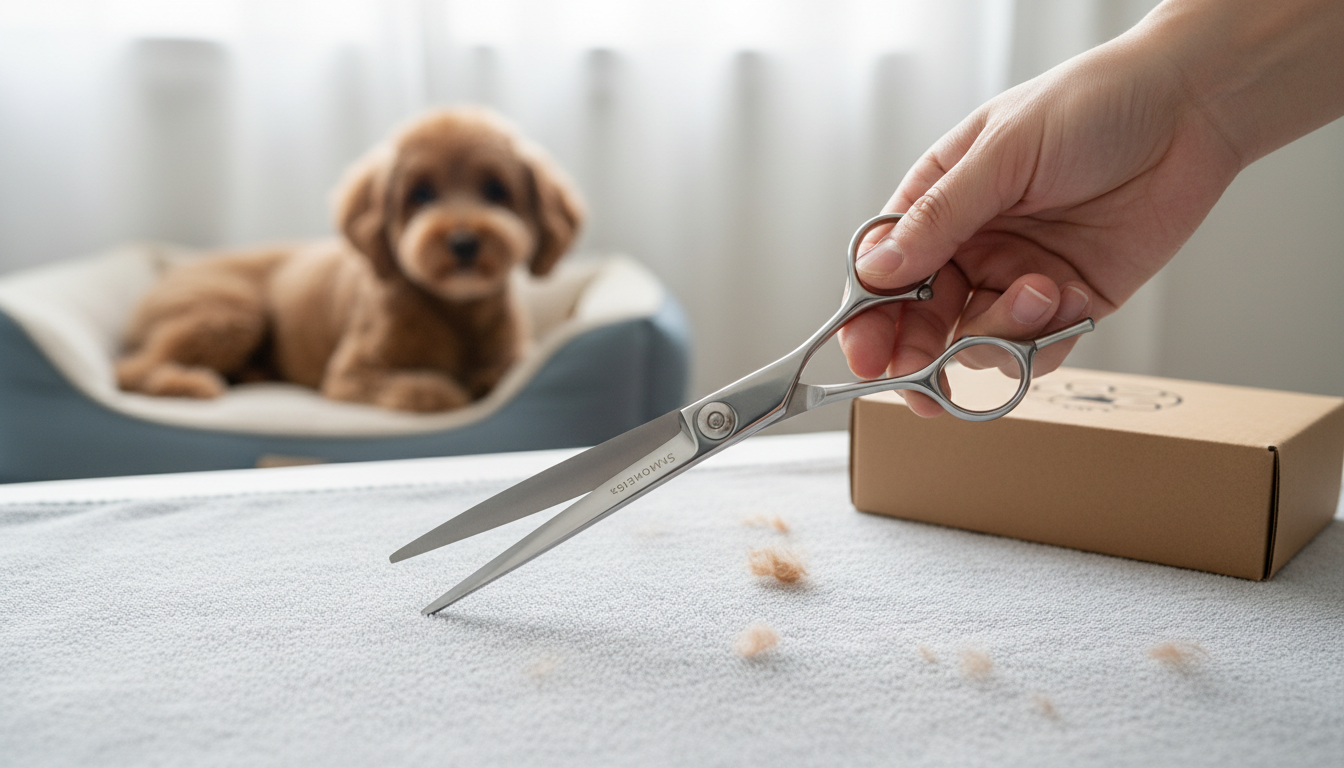
Swivel Dog Grooming Shears: Enhancing Comfort and Control for Detailed Trimming
Compare swivel dog grooming shears with a practical informational SEO brief, decision criteria, FAQs, and publishing checks before you commit.
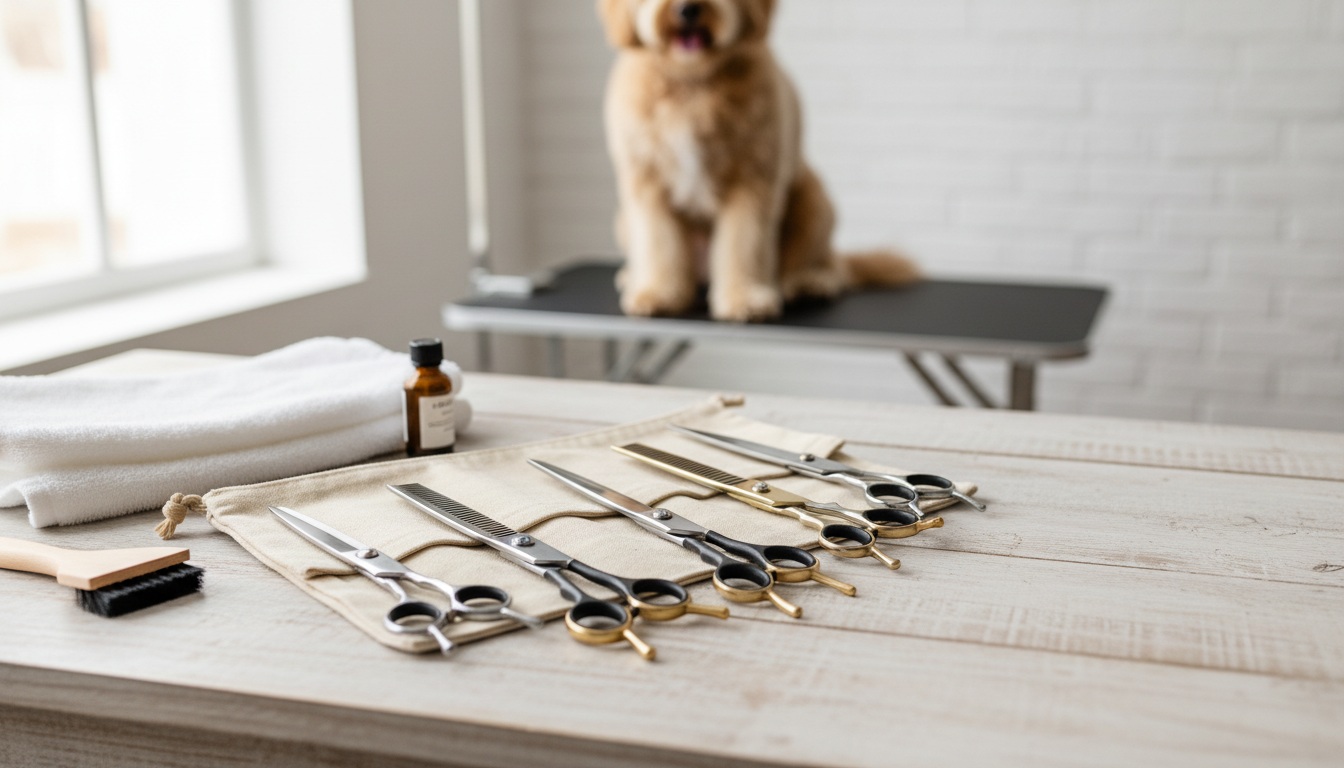
Investing in High-Quality Dog Grooming Shears: What to Look for in Professional-Grade Tools
Compare high quality dog grooming shears with a practical informational SEO brief, decision criteria, FAQs, and publishing checks before you commit.