
Lefty Dog Grooming Shears: Essential Considerations for Left-Handed Pet Owners
Unlocking Precision: A Guide to Lefty Dog Grooming Shears
For left-handed pet owners and professional groomers, the right tools are not merely a convenience but a necessity for effective and comfortable grooming. Lefty dog grooming shears are specialized instruments engineered with a fundamental difference from their right-handed counterparts: the blade orientation and ergonomic handle design are reversed. This means that when held in the left hand, the top blade is correctly positioned on the left, ensuring a clean, precise cut without pushing hair away or requiring awkward hand positioning.
This distinct construction addresses a common challenge faced by southpaw groomers using standard shears, which often leads to imprecise cuts, hand fatigue, and increased strain. The mirrored finger rests and thumb holes in left-handed shears provide a natural, balanced grip, promoting better control and reducing the physical effort required during prolonged grooming sessions. Without this specialized design, left-handed individuals may experience discomfort and reduced cutting efficiency.
This guide aims to empower left-handed individuals by clarifying the unique aspects of these specialized tools. We will explore essential selection criteria, highlight common challenges specific to left-handed grooming, and offer insights into optimal use. Our goal is to equip you with the knowledge to confidently choose dog grooming shears that enhance precision, minimize strain, and contribute to consistent, high-quality grooming results.
The Crucial Difference: Why Left-Handed Shears Aren't Just Flipped
Genuinely left-handed dog grooming shears are not merely right-handed shears with reversed handles; their fundamental design is re-engineered to accommodate the left hand's natural mechanics. This distinction is critical for both ergonomic comfort and cutting performance.
The primary difference lies in the blade orientation. For a left-handed user, the top blade of a true left-handed shear is positioned on the left. This alignment ensures that the cutting action remains visible and precise, as the top blade pushes the hair into the bottom blade. When a left-handed individual attempts to use right-handed shears, the top blade is on the right, causing it to push hair away from the cutting line. This often results in bent hairs, uneven cuts, and a frustrating lack of control.
Beyond blade orientation, the ergonomic considerations for left-handed shears are paramount. These tools feature specific handle designs, including mirrored finger rests and thumb holes, that are contoured to fit the natural grip of a left hand. This tailored fit promotes a neutral wrist position, reduces strain on tendons and joints, and allows for sustained comfort during grooming sessions. Using right-handed shears with the left hand forces an unnatural grip, leading to discomfort, hand fatigue, and potentially repetitive strain injuries over time. The evidence consistently shows that left-handed scissors are designed with these distinct accommodations to align with the user's dominant hand.
This specialized construction directly impacts the groomer's ability to achieve clean, consistent results while minimizing physical stress. Without these design considerations, left-handed groomers face challenges ranging from poor cut quality and reduced visibility of the cutting line to significant physical discomfort and diminished control, highlighting why these specialized tools are an essential investment.
Navigating the Types of Lefty Dog Grooming Shears for Every Task
For left-handed groomers, selecting the correct type of shear is as crucial as ensuring it's designed for left-handed use. Each shear type serves a distinct purpose, and having left-handed specific versions ensures precision, reduces strain, and optimizes cutting efficiency. Understanding these categories helps build a versatile toolkit tailored to various grooming needs and coat types.
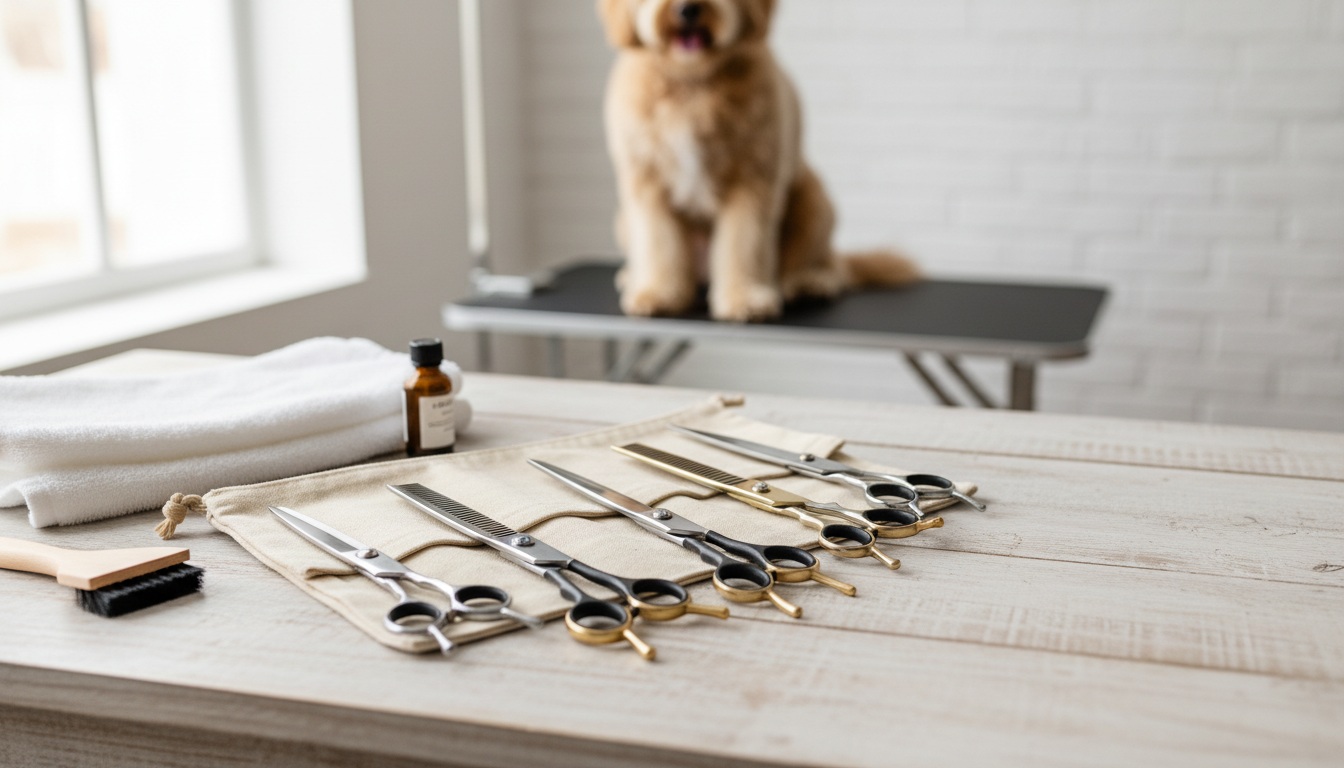
- Straight Shears: These are foundational tools for any groomer, left-handed or right-handed. For left-handed users, straight shears are essential for basic cuts, general trimming, and establishing initial coat length. They are particularly recommended as a starting point for beginners, alongside thinning shears, due to their versatility in handling most cutting tasks. The left-handed design ensures the cutting blade is correctly oriented for a clear sightline and clean cuts.
- Curved Shears: Designed for shaping and creating soft, rounded lines, left-handed curved shears are indispensable for areas like paws, heads, and topknots. They allow left-handed groomers to follow natural body contours and achieve smooth transitions without awkward wrist angles, which is a common issue when using right-handed curves. Professionals often utilize these for detailed aesthetic work.
- Thinning Shears: These shears feature one bladed edge and one notched edge, designed to remove a portion of the hair with each cut, rather than a solid line. For left-handed groomers, specialized thinning shears are vital for blending harsh lines, removing bulk from dense coats, and creating a natural, soft finish. As with straight shears, they are considered a core tool for beginners due to their ability to correct minor imperfections and refine blends.
- Chunkers/Blenders: Similar to thinning shears but with fewer, wider teeth, left-handed chunkers (sometimes called blenders) are engineered for more aggressive bulk removal and texturizing. They are particularly effective on thick coats, allowing for significant hair reduction while still leaving a natural, un-scissored appearance. These specialized shears are often part of a professional's expanded toolkit, with brands like Kenchii and Mirage offering left-handed versions for advanced coat work.
Each of these shear types is available with specific left-handed ergonomics, ensuring the blade configuration and handle orientation support the natural movement of a left-handed groomer. This specialized design is key to preventing hand fatigue and achieving consistent, high-quality results across all grooming tasks.
Key Considerations When Choosing Your Lefty Dog Grooming Shears
Selecting the right grooming shears is a pivotal decision for any left-handed pet owner or professional groomer. Beyond simply being labeled "left-handed," several specific criteria contribute to a tool's effectiveness, comfort, and longevity for southpaw users. Evaluating these factors carefully helps ensure your investment supports precise cutting, reduces strain, and delivers consistent results.
Here are the essential considerations for left-handed groomers:
- Material Quality: The foundation of a durable and sharp shear is its material. High-quality stainless steel, often with specific alloy compositions, is crucial for maintaining a sharp edge, resisting corrosion, and ensuring the shears can withstand repeated professional sharpening. While cheaper left-handed shears exist, they often compromise on material, leading to quicker dulling and a shorter lifespan, necessitating more frequent sharpening or replacement.
- Size and Ergonomics: For left-handed individuals, true ergonomic design is paramount. This includes matching the shear's overall length to your hand size and the specific grooming task. Handle designs should feature properly reversed finger rings and thumb holes, often with an offset or crane handle configuration, to align with the natural left-hand grip. Interchangeable finger inserts allow for a customized, snug fit, which is vital for reducing hand fatigue and enhancing control during extended grooming sessions.
- Dog Size and Coat Type: The appropriate blade length and shear strength are dictated by the dog you're grooming. Shorter blades (e.g., 4.5-6 inches) offer precision for small breeds, intricate work around faces and paws, or detail shaping. Longer blades (e.g., 7-10 inches) are more efficient for larger dogs or removing significant bulk from dense coats. Consider the coat's texture—finer blades for soft, silky coats, and more robust blades for thick, coarse, or matted fur.
- Balance and Weight: A well-balanced shear feels like an extension of your hand, distributing its weight evenly. For left-handed groomers, this balance is critical to prevent wrist and hand strain, especially during prolonged use. Test the feel; a shear that feels top-heavy or bottom-heavy will contribute to fatigue and compromise control, potentially affecting the quality of the cut.
- Adjustability (Tension Screws): A quality left-handed shear will feature an adjustable tension screw, allowing you to customize the blade's tightness. Proper tension ensures a smooth cutting action, prevents blades from gapping and bending hair, and allows for fine-tuning based on the coat type and your personal cutting preference. Too loose, and the shears may fold hair; too tight, and they can cause hand strain.
- Blade Edge Type:
- Convex Edge: These blades are razor-sharp, offering a smooth, effortless cut ideal for finishing work and precise shaping. They glide through hair with minimal resistance but are more delicate and require professional sharpening.
- Beveled Edge: More durable and robust, beveled edge shears are excellent for general cutting, bulk removal, and working through thicker coats. They may not offer the same silky-smooth feel as convex edges but are more forgiving and easier to maintain. Your choice depends on the primary tasks the shears will perform.
Common Pitfalls and Trade-offs for Left-Handed Groomers
Navigating the market for left-handed grooming shears presents specific challenges and considerations that southpaw groomers should be aware of. Understanding these potential pitfalls and trade-offs can help manage expectations and guide more informed purchasing decisions.
-
Durability Versus Initial Cost: A significant trade-off often exists between the upfront cost of shears and their long-term durability. Less expensive left-handed shears may utilize materials that dull more quickly, requiring frequent sharpening or even premature replacement. While attractive for budget-conscious buyers, this can lead to higher maintenance costs and operational downtime over time. In contrast, higher-quality shears, often made from superior steel alloys, retain their edge longer and withstand more rigorous use, offering better value and performance despite a greater initial investment. This choice balances immediate expenditure against sustained performance and reduced maintenance.
-
The 'Try Before You Buy' Imperative: For left-handed groomers, the ergonomic fit of shears is paramount for comfort and precision. The unique design of left-handed handles, finger rests, and thumb holes must align perfectly with an individual's hand shape and grip. Online purchasing, while convenient, removes the ability to physically assess this fit. What appears suitable in a product description may not translate to comfortable, balanced use in hand. Experiencing the weight distribution, finger ring size, and overall feel of the shears firsthand, even if through a limited trial, can be crucial for preventing hand fatigue and ensuring optimal control during grooming sessions.
-
Maintenance Requirements: Regardless of initial quality, all grooming shears, especially specialized left-handed ones, demand consistent maintenance. Neglecting proper cleaning, regular oiling of the pivot screw, and professional sharpening can quickly degrade performance. Dull or poorly maintained shears not only make grooming more difficult and less precise but can also cause discomfort for the dog and strain on the groomer's hand. Factor in the ongoing commitment to care, including the cost and availability of a reputable sharpener experienced with left-handed shear angles, to maximize the lifespan and effectiveness of your tools.
-
Limited Availability and Options: The market for specialized left-handed grooming shears is inherently smaller than for right-handed counterparts. This can result in fewer brands offering a full range of left-handed options across different shear types (e.g., straight, curved, thinning, chunking). Left-handed groomers might find themselves with fewer choices in terms of specific blade lengths, handle styles, or aesthetic designs. This limited availability might necessitate a more extensive search or, at times, a compromise on certain desired features or brand preferences compared to the broader selection available to right-handed groomers.
Making the Smart Choice: Matching Lefty Shears to Your Grooming Style
Selecting the ideal left-handed dog grooming shears involves a personalized assessment of your needs, ensuring the tools you choose enhance your unique grooming approach. For southpaw groomers, this decision goes beyond basic functionality to encompass ergonomic fit and specialized performance.
Consider these factors to guide your selection:
-
Evaluate Your Grooming Frequency If you're an occasional home groomer, a durable entry-level set might suffice. Your shears won't endure the constant use of a professional environment, so while quality is still important, the demands on longevity and extreme precision may be lower. Professional groomers, however, require shears designed for extended daily use, prioritizing high-grade materials that retain sharpness and withstand frequent sterilization, justifying a greater initial investment.
-
Define Your Primary Grooming Tasks Your typical grooming activities dictate the types of shears you'll need. For basic trims and tidying up, a good pair of straight shears is fundamental. If you aim for more intricate styling, shaping, or creating smooth transitions, curved shears become invaluable. For blending harsh lines, reducing bulk, or achieving a softer finish, left-handed thinning shears or blenders are essential. Beginners often find a straight shear and a thinning shear a practical starting point, covering a wide range of basic needs.
-
Prioritize Comfort and Ergonomics For left-handed individuals, comfort is paramount. True left-handed shears feature reversed blades and handle designs, ensuring the finger and thumb holes, as well as the finger rest, align naturally with your left hand. This design minimizes strain, prevents fatigue, and allows for greater control and precision. Before committing, consider how the shear feels in your hand, paying attention to the balance and the ease of opening and closing. A comfortable shear is a usable shear, especially during longer grooming sessions.
-
Set a Realistic Budget Left-handed grooming shears span a wide price range. While it's tempting to opt for the least expensive option, remember that lower-cost shears may be made from less durable materials, leading to quicker dulling and potentially requiring more frequent sharpening or replacement. Higher-quality shears, while a larger upfront investment, often offer superior edge retention, smoother action, and a longer lifespan, providing better long-term value and performance. Balance your budget with the expected frequency and intensity of use.
Ultimately, the best left-handed grooming shears for you will be those that align with your specific grooming goals, fit comfortably in your hand, and offer the necessary performance for your chosen tasks. A holistic view that considers quality, ergonomic fit, and purpose over just the price tag will lead to a more satisfying and effective grooming experience.
Frequently Asked Questions About Lefty Dog Grooming Shears
Left-handed groomers often have specific questions regarding their specialized tools. Understanding these common queries can help clarify selection criteria and reinforce best practices for maintaining optimal performance and comfort.
-
Why are left-handed shears different from right-handed shears? True left-handed shears feature a reversed blade orientation and ergonomic handle design. For a left-handed user, the top blade is positioned on the left, ensuring it pushes hair into the bottom blade for a clean, precise cut. Right-handed shears, when used by a left-hander, have the top blade on the right, which tends to push hair away from the cutting edge, leading to bent hairs, uneven results, and increased hand strain. The finger holes and thumb rests are also mirrored to provide a natural, comfortable grip for the left hand.
-
What types of shears should a beginner left-handed groomer start with? For beginners, a foundational set typically includes a straight shear and a thinning shear. Straight shears are versatile for general cutting and shaping, while thinning shears are essential for blending lines and removing bulk without significantly altering coat length. These two types provide a solid starting point for most basic grooming tasks.
-
How important is the material quality for left-handed shears? Material quality, particularly the type of steel used, is crucial for left-handed shears. Higher-quality steel contributes to greater durability, superior edge retention, and a smoother cutting action. This reduces the frequency of sharpening and helps prevent issues like dulling or chipping, which can compromise precision and lead to pulling the dog's hair. Investing in good material quality ensures a more effective and comfortable grooming experience over time.
-
Are left-handed grooming shears more expensive? Generally, left-handed grooming shears can be more expensive than comparable right-handed models. This often stems from lower production volumes, requiring specialized manufacturing processes and tooling. While the initial investment might be higher, the ergonomic benefits and improved cutting performance often justify the cost, as they contribute to reduced hand fatigue and more consistent results.
-
How do I care for my left-handed grooming shears? Proper care extends the life and performance of your shears. After each grooming session, clean the blades to remove hair and debris. Apply a drop of shear oil to the pivot screw and between the blades regularly to maintain smooth action. Always store shears in a protective case or pouch to prevent accidental damage to the blades. Regular professional sharpening by a specialist who understands grooming shear angles is also vital to keep them in optimal condition.
Empowering Your Grooming Journey as a Lefty
For left-handed pet owners and professional groomers, recognizing and addressing your unique ergonomic needs is fundamental to successful and comfortable grooming. Investing in specialized left-handed shears is not merely a preference; it's a strategic decision that directly impacts your comfort, the precision of your work, and the safety of the animal you're grooming. These tools are engineered to align with your natural hand mechanics, reducing strain and ensuring that each cut is clean and intentional, rather than a struggle against a mismatched instrument.
Throughout this guide, we've highlighted the crucial distinctions in blade orientation and handle design that set true left-handed shears apart. We've also explored critical factors for selection, including the importance of high-quality metal for durability, matching shear types (straight, thinning, curved) to specific grooming tasks, and assessing the fit of handles to your hand size. Understanding the trade-offs between initial cost and long-term performance, as well as the need for proper maintenance, empowers you to make a discerning choice.
Ultimately, your journey as a left-handed groomer is enhanced by tools that support your natural abilities. By applying the criteria and insights discussed, you can confidently select shears that feel like a natural extension of your hand, leading to more efficient, precise, and enjoyable grooming sessions for both you and your canine companion.
More in Dog Grooming Shears
View All
Dog Grooming Shears at PetSmart: Value Options for Casual Home Groomers
Compare dog grooming shears petsmart with a practical informational SEO brief, decision criteria, FAQs, and publishing checks before you commit.
Swivel Dog Grooming Shears: Enhancing Comfort and Control for Detailed Trimming
Compare swivel dog grooming shears with a practical informational SEO brief, decision criteria, FAQs, and publishing checks before you commit.
Investing in High-Quality Dog Grooming Shears: What to Look for in Professional-Grade Tools
Compare high quality dog grooming shears with a practical informational SEO brief, decision criteria, FAQs, and publishing checks before you commit.