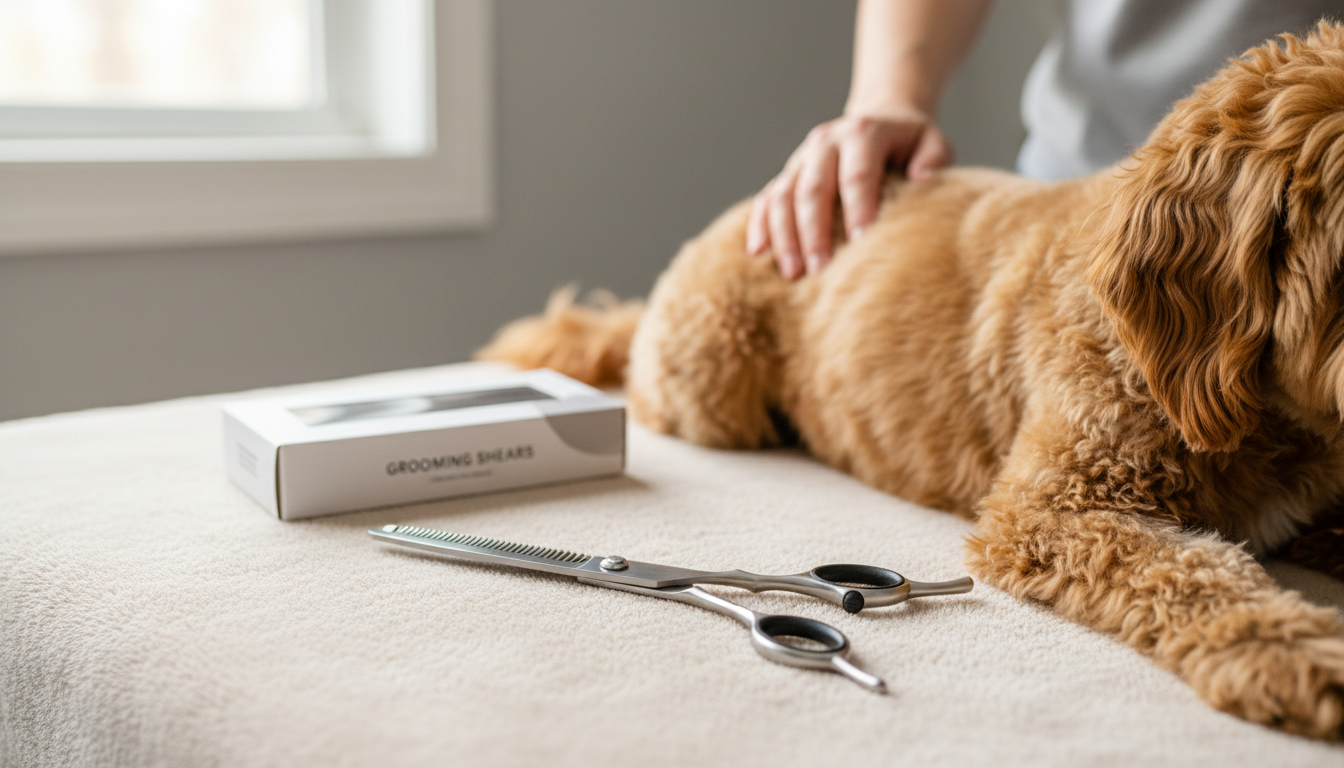
Mastering Curved Thinning Shears for Dog Grooming: Techniques for Natural Blends
Unlock Natural Blends: Why Curved Thinning Shears Are Essential for Dog Grooming
Curved thinning shears are specialized grooming tools characterized by their gently arced blades and serrated teeth. Unlike traditional cutting shears that remove solid sections of hair, thinning shears are designed to reduce bulk and soften lines. The unique curvature of these shears allows groomers to follow a dog's natural body contours, making them indispensable for achieving seamless, blended finishes rather than abrupt cut lines.
These shears differ significantly from their counterparts. While straight thinning shears effectively reduce hair volume and blend, their straight edge can struggle to conform to rounded body parts like hips, shoulders, or heads, potentially leaving flatter, less natural-looking results. Regular straight scissors, on the other hand, are intended for precise, defined cuts and shaping, removing entire sections of hair and creating distinct lines. Curved thinning shears bridge this gap by offering both bulk reduction and the ability to sculpt with the dog's anatomy, resulting in a more organic, flowing appearance.
This article aims to equip both dog owners and professional groomers with the knowledge to confidently navigate the selection and application of curved thinning shears. We will explore their specific advantages, guide you through critical feature considerations, and outline effective techniques for their use, empowering you to achieve advanced, natural-looking grooming results.
Beyond Bulk: How Curved Thinning Shears Solve Common Grooming Challenges
Curved thinning shears offer distinct advantages over their straight counterparts, specifically addressing challenges in achieving natural, flowing finishes on a dog's varied anatomy. Their unique design makes them indispensable for groomers aiming for seamless transitions and comfortable experiences for the dog.
The primary benefit of a curved blade lies in its ability to follow a dog's natural body lines and curves. Unlike straight shears that can create flat spots or awkward angles on rounded surfaces, curved thinning shears conform to the contours of:
- Heads and Muzzles: Allowing for a softer, more rounded appearance around the face without harsh lines.
- Legs and Shoulders: Blending the coat smoothly over muscle groups and joints, respecting the dog's natural angulation.
- Hips and Tucks: Creating a graceful, tapering effect that enhances the dog's silhouette.
This anatomical conformity is crucial for reducing bulk without creating harsh lines, a common pitfall with less specialized tools. While straight thinning shears effectively remove volume, using them on a curved surface can inadvertently flatten the coat or leave visible chop marks where the straight edge struggled to maintain a consistent distance from the skin. Curved thinning shears, by contrast, allow for a continuous, even reduction of density that flows with the dog's form, resulting in a more natural, blended finish that avoids a "cut" look.
Furthermore, these specialized shears enhance effectiveness for sensitive areas, contributing to both precision and the dog's comfort. The ability of the curved blade to hug the body line means less need for extreme wrist contortions by the groomer, providing better control. This increased stability and natural fit reduce the risk of accidental nicks or pulling, making them particularly useful around:
- Ears and ear leathers
- Under the chin and throat
- Around paw pads and delicate areas of the legs
In contrast, while straight thinning shears are valuable for broad areas of bulk reduction on flatter surfaces or for creating a very subtle, linear texture, their limitations become apparent when working with the inherent three-dimensional nature of a dog's coat. They can require more passes or a less ergonomic approach to achieve a blended look on rounded areas, potentially leading to a less efficient grooming process and a less refined outcome. Curved thinning shears bridge this gap, offering a tool specifically engineered to complement a dog's natural shape, ensuring a smoother, more aesthetically pleasing, and comfortable grooming experience.
Choosing Your Tool: Key Features of Quality Curved Thinning Shears
Selecting the right curved thinning shears is foundational for achieving natural blends and precise contouring in dog grooming. Each component, from the blade's composition to the handle's design, plays a role in the tool's performance, durability, and your ability to execute advanced techniques. Understanding these critical features empowers you to make an informed decision tailored to your specific grooming needs.
Blade Material and Edge Quality
The material and craftsmanship of the shear blades directly influence their cutting ability and longevity. High-quality curved thinning shears typically feature stainless steel, with premium options often utilizing Japanese steel alloys (e.g., 440C, VG-10). These materials are chosen for their balance of hardness, corrosion resistance, and ability to hold a sharp edge.
- Hardness Rating (HRC): Measured on the Rockwell Hardness Scale (HRC), this indicates the steel's resistance to wear and deformation. Shears with an HRC of 58-62 generally offer excellent edge retention, crucial for consistent, clean cuts when blending. A harder blade maintains its sharpness longer, reducing the frequency of sharpening and ensuring a smooth action that prevents hair snagging—a common issue with duller blades.
- Edge Finish: For thinning shears, the edge quality is paramount for clean bulk reduction. A finely honed edge, often achieved through convex grinding, allows the cutting blade to glide smoothly past the serrated teeth, minimizing friction and ensuring hair is cut, not crushed or pulled.
Tooth Count and Pattern: Blending vs. Texturizing
The number and configuration of teeth on a curved thinning shear dictate the amount of hair removed with each cut and the resulting finish. This is particularly important when aiming for specific blending or texturizing effects while following a dog's contours.
- Lower Tooth Counts (e.g., 20-30 teeth): These shears are often referred to as "chunkers" or "outliners." They remove a more significant percentage of hair, making them suitable for aggressive bulk removal and creating defined texture. When curved, they can quickly shape large areas while still respecting the dog's form.
- Higher Tooth Counts (e.g., 40-50+ teeth): Known as "blenders" or "finishers," these shears remove a smaller percentage of hair, creating a softer, more diffused effect. Their fine teeth are ideal for seamless transitions, softening harsh lines, and achieving a natural, air-brushed finish, especially around delicate curves like the head or hips. The curve allows for precise application of this subtle blending.
Ergonomics and Handle Design
Comfort and control are non-negotiable for precise grooming, especially during extended sessions or when executing intricate contouring. The ergonomic design of curved thinning shears directly impacts user fatigue and the accuracy of the cut.
- Handle Style:
- Offset Handles: Position the thumb hole closer to the cutting blade, reducing stress on the thumb, wrist, and shoulder by promoting a more natural hand position. This is beneficial for maintaining control when working at various angles required by curved shears.
- Crane Handles: Offer an even greater offset, further reducing strain and providing maximum comfort for groomers who spend long hours using shears.
- Swivel Thumb: Allows the thumb ring to rotate, providing exceptional flexibility and reducing repetitive strain injuries by enabling a wider range of cutting positions without twisting the wrist.
- Finger Rests: Fixed or removable finger rests provide stability and leverage, enhancing control and reducing hand fatigue.
- Material: Lightweight yet durable materials, often coated for grip, contribute to overall comfort and maneuverability.
Shear Size and Blade Curve
The overall length of the shear and the degree of its blade curve are critical for matching the tool to the dog's size and the specific areas being groomed for effective contouring.
- Overall Length (e.g., 6.5 to 8 inches):
- Shorter Shears (6.5-7 inches): Offer greater maneuverability and precision, making them suitable for smaller breeds, intricate work around faces, paws, or tight curves.
- Longer Shears (7.5-8 inches): Cover more surface area per cut, ideal for larger breeds or blending broad sections of the coat, such as the body or legs.
- Degree of Curve: The arc of the blade dictates how closely the shear can follow a dog's natural contours. A subtle curve is versatile for general body work, while a more pronounced curve excels at sculpting rounded shapes like topknots, hips, or angulations, ensuring a smooth, natural flow.
Tension Adjustment and Smooth Action
An adjustable tension screw is a fundamental feature that allows groomers to fine-tune the shear's performance. Proper tension ensures a smooth, consistent cutting action, which is vital for achieving seamless blends and preventing hair damage.
- Adjustable Screw: Typically located at the pivot point, this mechanism allows you to tighten or loosen the blades. Correct tension prevents the blades from being too loose (which can cause hair to fold or snag) or too tight (leading to hand fatigue and uneven cuts).
- Smooth Action: When correctly adjusted, quality curved thinning shears should open and close effortlessly without resistance or grinding. This smooth operation is crucial for the delicate, repetitive movements involved in blending and contouring, allowing for precise control and a consistent finish without pulling the dog's hair.
Precision & Finesse: Mastering Techniques with Curved Thinning Shears
Effectively utilizing curved thinning shears transforms grooming from simple trimming into an art of natural blending and contouring. These specialized tools, with their unique arc and serrated blades, enable groomers to sculpt a dog's coat in harmony with their natural physique. Mastering their use involves understanding specific techniques for various coat types and body areas, ensuring a smooth, aesthetically pleasing, and comfortable experience for the dog.
The Art of Blending and Softening Lines
Achieving seamless transitions between different coat lengths is a primary application for curved thinning shears. The goal is to avoid harsh lines and create a soft, natural flow.
- Angle and Approach: Hold the shears with the curve matching the natural curve of the dog's body. For blending, aim to cut with the blades parallel to the coat's surface, or at a slight angle away from the body, rather than straight into it. This allows for gradual hair removal.
- Light, Overlapping Strokes: Work in small, controlled sections. Instead of closing the shears completely on a large amount of hair, take light, feathery snips. Overlap each stroke slightly to ensure a continuous blend.
- Brush and Assess: Regularly brush the area after a few strokes to remove cut hair and assess the blend. This prevents over-thinning and allows you to see where more work is needed.
- Direction of Growth: Generally, work with the natural direction of hair growth for the softest blend. For more aggressive bulk removal or a stronger blend, you might work against the growth, but do so with extreme caution and lighter pressure.
Contouring and Shaping for Natural Silhouettes
Curved thinning shears are invaluable for creating a well-defined, natural silhouette that complements the dog's anatomy. The curve of the blade allows for precise shaping around rounded body parts.
- Follow the Form: Identify the dog's natural bone structure and musculature (e.g., hips, shoulders, rib cage, skull). Align the curve of the shears with these natural contours.
- Sculpting Motion: Use a gentle, sweeping motion, allowing the curve of the shears to guide the cut along the body. This prevents the creation of flat spots or angular lines on rounded areas.
- Layered Reduction: Build the desired shape gradually. Start by removing a small amount of hair from the outer layers, then work inwards, maintaining the natural curve. This layered approach ensures a smooth, sculpted finish.
- Visualizing the Outline: Step back frequently to view the dog's overall shape. This helps in maintaining symmetry and ensuring the contour flows naturally from one section to another.
Working Around Sensitive Areas
Grooming delicate areas like the face, paws, and sanitary regions requires extra care and precision. Curved thinning shears can offer an advantage in these spots due to their ability to hug contours, but safety remains paramount.
- Secure the Dog: Ensure the dog is calm and comfortably restrained. A steady hand is crucial.
- Protect the Skin: Always place your non-cutting hand or fingers between the shear blades and the dog's skin, especially around eyes, ears, and paw pads.
- Small, Controlled Snips: Work with very small sections of hair. The curved blade can help navigate the contours of the muzzle or around the eyes more naturally than a straight blade, but each snip should be deliberate and minimal.
- Blade Orientation: When working near eyes or ears, always point the tips of the shears away from the dog's body. For paws, use the curve to shape around the foot, lifting paw pads to thin hair between them if necessary, always being mindful of the skin.
Common Mistakes to Avoid
Even experienced groomers can encounter challenges. Awareness of common pitfalls can help refine technique and prevent undesirable outcomes.
- Uneven Cuts or "Holes": This often results from closing the shears too quickly or taking too much hair in one spot.
- Correction: Work slowly, using light, overlapping strokes. Brush frequently to redistribute hair and assess the blend.
- Pulling or Snagging Hair: Dull blades are a primary cause. Incorrect technique, such as trying to cut too much hair at once or not fully closing the shears on the hair, can also lead to pulling.
- Correction: Ensure shears are sharp and well-maintained. Take smaller sections of hair and ensure the blades close completely through the hair.
- Over-Thinning: Removing too much hair can create sparse patches that are difficult to correct.
- Correction: Always start conservatively. You can always remove more hair, but you cannot put it back. Use the brush-and-assess method diligently.
- Ignoring Coat Direction: Cutting against the natural lay of the coat without intent can create an unnatural texture or lift.
- Correction: Understand the coat's growth patterns. While some techniques might involve cutting against the grain for specific effects, it should be a conscious choice, not an oversight.
Understanding the Trade-offs: When Curved Thinning Shears Are (and Aren't) the Best Choice
While curved thinning shears are invaluable for achieving natural blends and sculpted finishes, it's important to recognize their specific role and limitations within a grooming toolkit. They are specialized instruments, not universal solutions, and understanding their trade-offs helps in setting realistic expectations and making informed purchasing decisions.
Developing Proficiency with Curved Thinners
Mastering curved thinning shears requires a distinct skill set compared to using basic straight shears. Their unique arc demands a different hand position, angle of approach, and understanding of how the curve interacts with the dog's coat and body contours. Achieving truly seamless blends and avoiding uneven patches takes practice and a nuanced touch. While straight shears are generally more forgiving for initial bulk removal or straightforward cuts, the precision and artistry of curved thinning shears come with a learning curve that new users should anticipate.
Specialized Application, Not Primary Tool
Curved thinning shears excel in specific scenarios: softening harsh lines, blending different coat lengths, texturizing, and contouring around rounded body parts like hips, shoulders, and heads. However, they are not designed for significant bulk removal or for making initial, substantial length reductions. For heavy matting or taking a large amount of hair off, traditional straight shears or clippers remain the primary tools. Curved thinning shears function as a finishing and refinement instrument, complementing other tools rather than replacing them for general grooming tasks.
Investment in Quality
The specialized design and precision required for effective curved thinning shears often mean a higher investment compared to basic straight shears. High-quality curved shears feature superior steel, precisely ground blades, and ergonomic designs that contribute to their performance and longevity. Conversely, cheaper alternatives may compromise on blade alignment, sharpness, or material quality, leading to frustrating experiences like pulling the dog's hair, ineffective blending, or rapid dulling. Considering these shears as a long-term investment in consistent, professional-grade results can guide the purchasing decision.
Care and Longevity Requirements
Like all precision grooming tools, curved thinning shears demand diligent maintenance to preserve their performance. Their intricate blade design, particularly the thinning teeth, requires careful cleaning after each use to remove trapped hair and debris. Regular, professional sharpening is also crucial to maintain the integrity of both the curved edge and the thinning mechanism. Neglecting proper care can lead to premature dulling, reduced cutting efficiency, and potential discomfort for the dog due as the shears may pull or snag the coat rather than cut cleanly.
Preserving Your Investment: Care and Maintenance for Longevity
Maintaining your curved thinning shears is crucial for ensuring their precision, extending their lifespan, and protecting the quality of your grooming work. Due to their specialized design, particularly the curved blades and delicate teeth, proper care goes beyond general shear maintenance.
-
Immediate Cleaning and Disinfection: After each grooming session, remove all hair from the blades and teeth using a soft brush or cloth. Follow this with a thorough wipe-down using a shear-specific disinfectant or an alcohol wipe. Ensure the shears are completely dry before storage to prevent rust and corrosion, especially around the pivot screw and between the teeth. A single drop of shear oil on the pivot point after cleaning helps maintain smooth action and lubricates the joint.
-
Secure Storage: The curved blades and fine teeth of thinning shears are susceptible to damage from impacts. Always store your shears in a dedicated, protective case or pouch when not in use. Avoid tossing them into a drawer with other tools, as this can dull edges, bend teeth, or misalign the blades. Keeping them closed or slightly ajar, as recommended by the manufacturer, also helps protect the cutting surfaces.
-
Professional Sharpening is Essential: Curved thinning shears require specialized sharpening due to their unique geometry and the intricate design of their teeth. Attempting to sharpen them yourself or using generic sharpening tools can permanently damage the blade angles, ruin the teeth pattern, and compromise the shear's ability to blend effectively. Entrust your shears only to experienced professional sharpeners who understand the specific requirements for curved and thinning shear blades. This ensures the correct angle and tooth integrity are maintained, preserving their cutting performance.
-
Tension Adjustment for Optimal Performance: The tension of your shears directly impacts their cutting efficiency and your hand comfort. Incorrect tension can lead to hair snagging, uneven cuts, or unnecessary strain on your hand. To check tension, hold the shear by one finger hole and let the other blade hang freely; it should close slowly and smoothly, not snap shut or remain wide open. Adjust the tension screw incrementally, usually a small dial or flat-head screw, until you achieve this controlled closure. Too loose, and the shears will fold hair; too tight, and they will cause fatigue and premature wear.
Frequently Asked Questions About Curved Thinning Shears
Understanding the nuances of curved thinning shears can help groomers make informed choices and refine their techniques. Here are answers to common questions regarding their use and selection.
What is the main difference between curved and straight thinning shears?
The primary distinction lies in their blade design and intended application. Straight thinning shears feature a flat blade and are effective for reducing bulk and blending on relatively flat surfaces or for creating straight lines of texture. Curved thinning shears, conversely, have an arced blade that allows them to follow a dog's natural body contours, such as the curve of a leg, hip, or head. This curvature enables more seamless blending and sculpting of rounded areas, preventing the creation of flat spots and promoting a more natural, flowing finish. Both types reduce hair volume, but the curved variant excels at achieving organic shapes and smooth transitions.
Are curved thinning shears suitable for beginners?
While straight thinning shears are often recommended as a foundational tool for beginners to learn basic bulk reduction and blending, curved thinning shears can be introduced once a groomer has developed comfort and proficiency with basic techniques. Their unique shape requires a slightly different hand position and an understanding of how to manipulate the curve to follow a dog's anatomy. For beginners ready to explore more advanced blending and contouring, curved thinning shears are an excellent tool for skill development, but they might not be the very first thinning shear purchased.
How do I choose the right tooth count for my dog's coat?
The tooth count on curved thinning shears directly impacts how much hair is removed and the resulting finish.
- Lower tooth counts (e.g., 20-30 teeth): These shears remove a greater percentage of hair with each cut. They are suitable for significant bulk reduction on very dense or thick coats, though they may leave more noticeable lines if not used with care.
- Higher tooth counts (e.g., 40-50+ teeth, often called blenders): These remove less hair per cut, creating a softer, more diffused blend and a very natural finish. They are ideal for finer coats, delicate areas, or when aiming for a subtle, seamless transition.
Consider the dog's coat density and the desired outcome. For general blending and a safe starting point, a higher tooth count often provides more forgiving results.
Can these shears be used on all dog breeds and coat types?
Curved thinning shears are highly versatile and can be used on most dog breeds and coat types, but their application varies. They are particularly effective for breeds that require sculpted, rounded finishes or significant blending, such as Poodles, Doodles, Bichons, or many Terrier breeds. For double-coated breeds, they can help reduce undercoat bulk and blend the outer coat without compromising its structure. However, on very short or extremely fine coats, their use might be limited or require exceptional precision to avoid over-thinning or creating an unnatural appearance. Always assess the specific coat texture and density to determine the most appropriate technique.
How often should I have my curved thinning shears sharpened?
The frequency of sharpening depends heavily on usage, the types of coats groomed, and the initial quality of the shears. Signs that your curved thinning shears need sharpening include pulling or snagging hair, leaving uneven cuts, or requiring excessive force to close. For professional groomers with daily use, sharpening every 3 to 6 months is a common recommendation. Home groomers using their shears less frequently might find that sharpening once a year or as needed is sufficient. It is crucial to have them sharpened by a professional who specializes in grooming shears to maintain the precise edge and the critical curvature of the blades.
Achieve Professional Finishes: Your Guide to Confident Grooming
Curved thinning shears offer a distinct advantage in dog grooming, enabling the creation of natural, flowing finishes that are difficult to achieve with straight tools. By conforming to a dog's unique anatomy, these shears allow for seamless blending, effective bulk reduction, and the sculpting of soft lines around curved areas like heads, hips, and legs. This specialized capability moves beyond basic trimming, empowering groomers to enhance a dog's natural contours and achieve a polished, professional aesthetic.
Making an informed choice about your curved thinning shears involves considering several factors specific to your grooming needs. Evaluate your dog's coat type, as density and texture can influence the ideal tooth count or blade design for effective blending. Consider the desired style: are you aiming for a fluffy, natural look or a more sculpted, refined finish? Your personal skill level is also a critical factor; while beginners might start with general thinning shears, mastering curved variations opens up advanced styling possibilities.
Ultimately, the synergy between the right tool and practiced technique is paramount. Selecting curved thinning shears tailored to your specific requirements minimizes the risk of uneven cuts or harsh lines, contributing to a more comfortable and positive grooming experience for the dog. This thoughtful approach not only leads to more satisfying aesthetic outcomes but also fosters a stronger bond and trust between you and your canine companion, elevating every grooming session into an opportunity for precision and artistry.
More in Dog Grooming Shears
View All
Dog Grooming Shears at PetSmart: Value Options for Casual Home Groomers
Compare dog grooming shears petsmart with a practical informational SEO brief, decision criteria, FAQs, and publishing checks before you commit.
Swivel Dog Grooming Shears: Enhancing Comfort and Control for Detailed Trimming
Compare swivel dog grooming shears with a practical informational SEO brief, decision criteria, FAQs, and publishing checks before you commit.
Investing in High-Quality Dog Grooming Shears: What to Look for in Professional-Grade Tools
Compare high quality dog grooming shears with a practical informational SEO brief, decision criteria, FAQs, and publishing checks before you commit.